
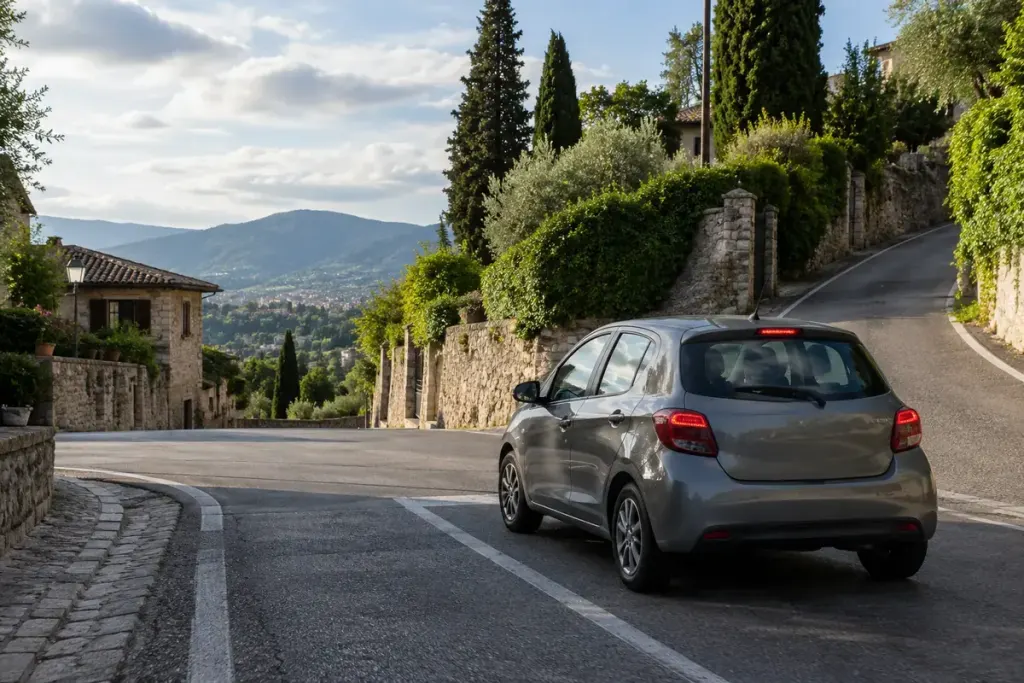
On an incline, a car may hold the brakes briefly after the driver releases the pedal. That pause can help during the move to the accelerator, but it is not a promise that the car will remain stationary indefinitely.
Manufacturers use names such as hill-start assist or hill-launch assist. Ford’s Figo description, for example, describes a short brake hold during a hill start. Availability and operation belong to the particular model and specification, not every car wearing the same badge.
Find the activation conditions
Read your manual for the required slope, gear selection and driver actions. Check whether the feature operates automatically, whether it can be disabled and what warnings mean. Some conditions may prevent activation even though the feature worked on another hill.
Do not test its limit by allowing the car to roll towards another vehicle. If you are unfamiliar with hill starts, practise with a qualified instructor in a suitable place. The assistance supports the driver’s control; it does not replace braking or safe spacing.
Keep three functions separate
Hill-start assistance, a longer-hold function and the parking brake may have different controls and release conditions. A familiar dashboard symbol is not enough reason to assume that one feature is holding the vehicle for you.
When stopping for longer, follow the manual’s procedure for securing the car. Before leaving the seat, use the required parking method rather than relying on a temporary aid. If a warning appears, retain control and obtain the appropriate service advice.
A useful ownership note identifies the feature’s name, where its instructions are located and how to recognise an unavailable condition. That is more reliable than memorising an exact number of seconds from another model’s brochure. The question to answer is what your car will do during the handover—and what you must still do yourself.