
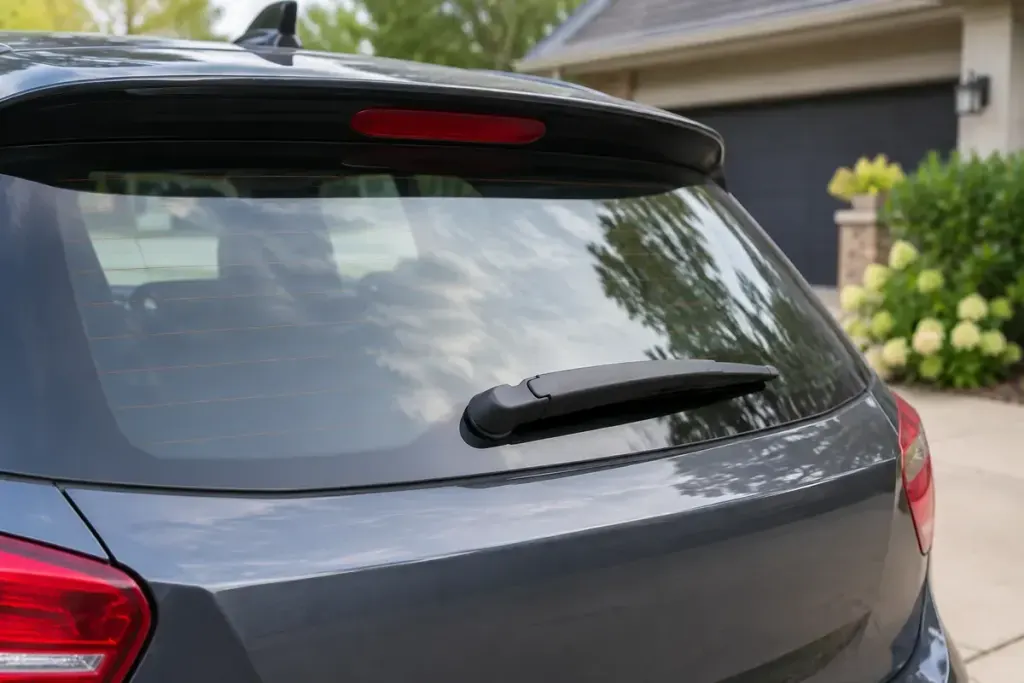
Switching off a rear wiper does not usually mean that the blade should stop wherever it happens to be. A correctly operating system normally returns it to a designated resting position. The location varies by vehicle, and the instructions for one model should not be used as a universal reset procedure.
The first useful comparison is with the owner’s manual or a clear photograph of the same vehicle in normal operation. A blade resting at a different angle is a reason to investigate, not a reason to push it back by hand.
Observe before touching
Park safely, secure the vehicle and check whether the glass or blade is obstructed. Ice, packed debris or a caught object needs appropriate attention before the system is used again. Follow the manufacturer’s guidance for cleaning or releasing a frozen blade; do not run the motor repeatedly against resistance.
Record what happened. Did the wiper stop after the ignition was switched off, during an ordinary wipe, or after recent work? Does it move at all? These observations help distinguish an operating sequence from a fault without diagnosing the motor, wiring or arm attachment by guesswork.
Keep adjustments model-specific
Some vehicles link rear-wiper behaviour to reverse gear or other controls. Check the relevant settings and operating conditions in the manual. An automatic wipe at an unexpected moment is not necessarily the same issue as a blade that fails to park.
Do not loosen the arm nut, pull the blade across the glass or perform an internet reset sequence intended for another model. Changing the arm’s position can hide the symptom while leaving the underlying problem unresolved.
If normal parking cannot be restored by the documented user procedure, have the system inspected. Explain the conditions you recorded and any recent servicing. Until it works properly, take the loss of rear visibility into account and avoid driving when you cannot see adequately.
A rear wiper is a small component, but its resting position is useful diagnostic information. Preserve that information before attempting an adjustment.