
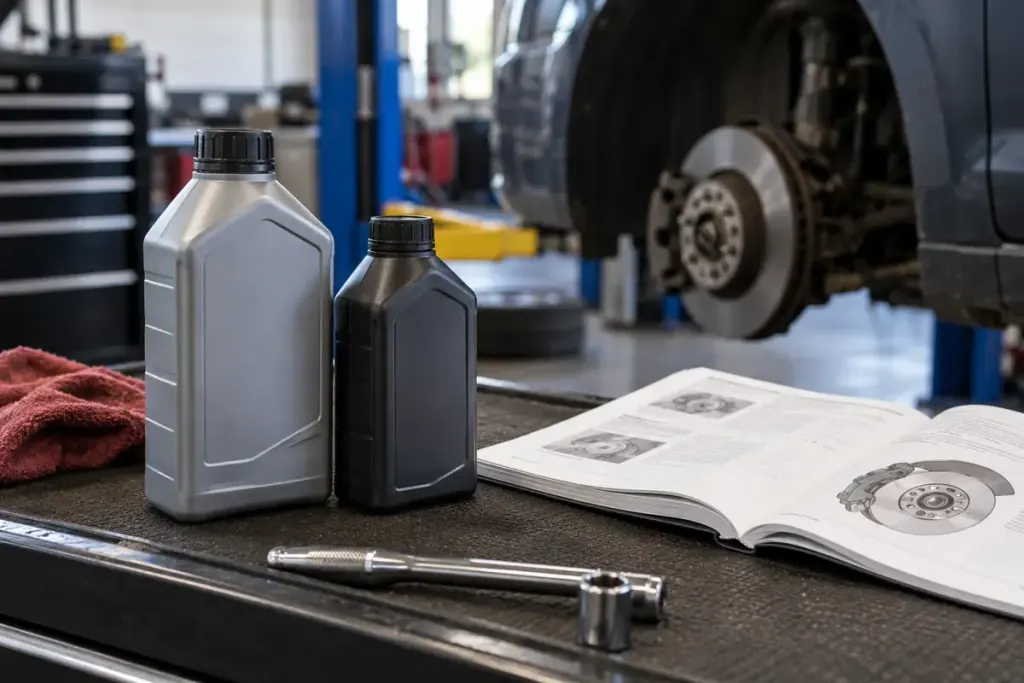
Several brake-fluid bottles can look suitable on a shop shelf. A familiar colour or a larger DOT number is not enough to choose among them. The correct starting point is the specification required by the vehicle manufacturer.
Brembo’s brake-fluid information distinguishes products with different boiling-point and viscosity characteristics and directs replacement intervals back to the vehicle manufacturer’s requirements. The exact specification can matter to the braking and stability-control system.
Copy the requirement, not just the first number
Use the handbook for the correct model and year, and check any relevant manufacturer updates. Record the full required designation or approval. If the manual specifies a low-viscosity product or a particular standard, do not drop that part when asking a shop or workshop for help.
Keep DOT 5 and DOT 5.1 distinct; similar-looking names should not be treated as proof of interchangeability. Ask a qualified technician about compatibility rather than mixing fluids based on an assumption.
A low level needs an explanation
Do not treat an unexplained drop as an invitation to keep topping up. Brake wear, leaks or other issues require appropriate assessment. If there is a warning, altered braking or suspected leakage, follow the vehicle’s safety instructions and obtain professional assistance before continuing to drive.
Brake-fluid work also involves cleanliness, handling precautions and correct service procedures. Opening a bottle is not the same as being equipped to service or bleed a braking system.
For your maintenance record, retain the date, mileage, product specification and workshop documentation. A note saying only “brakes done” leaves the next owner or technician guessing about what was actually serviced.
The useful purchase question is therefore not which bottle appears most advanced. It is which product and procedure satisfy this particular vehicle’s requirements, with a clear record of the work.