
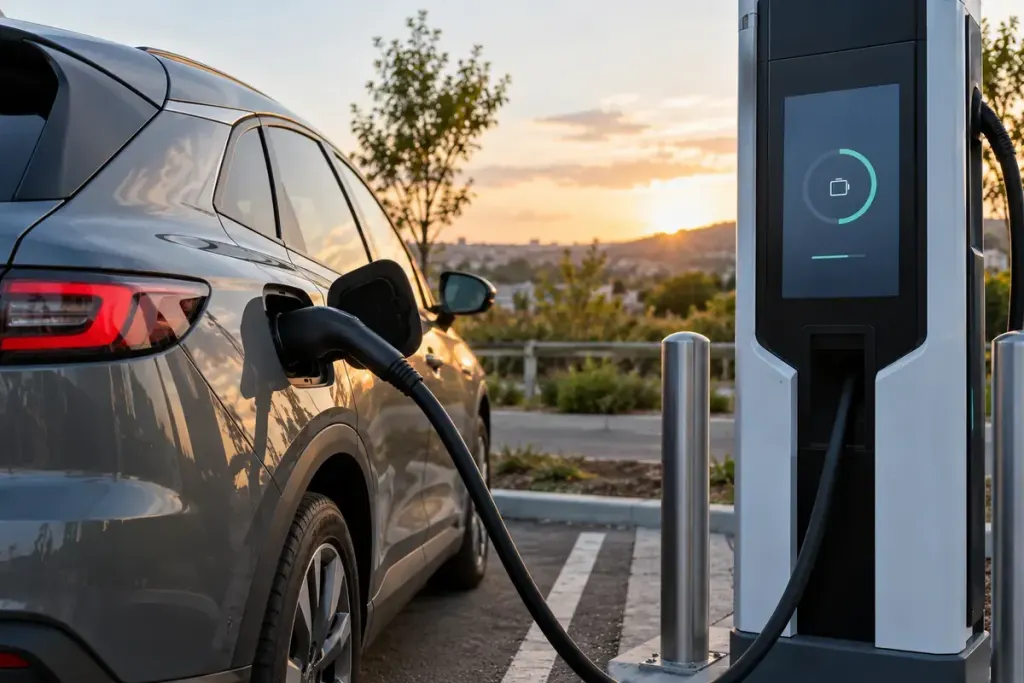
The charger is advertised with a high power rating, but the number on the car’s display falls as the battery approaches full. That can be normal. A charging session follows a changing rate rather than holding the largest advertised figure from beginning to end.
The vehicle and charging equipment coordinate the power delivered. Battery charge level and temperature are among the factors affecting it. As one manufacturer example, Tesla’s Supercharging guidance explicitly notes that charging slows as the battery fills and that reaching 100% can take considerably longer than reaching 80%.
Why the last part feels slow
Think of the displayed kilowatts as the rate at that moment, not the quantity already added. Kilowatt-hours describe energy. A reduced rate means each additional unit of energy takes longer, even though the charger itself has not necessarily changed its maximum capability.
There is no universal point where every EV tapers in the same way. Model, battery condition, temperature and charging conditions matter. Do not copy another car’s charging curve and treat a different result as proof that your battery is faulty.
Plan the stop around the next leg
Use your vehicle’s supported route planning and charging guidance, including the reserve needed for the journey. If the next reliable charging opportunity is far away, the extra time to reach a higher level may be necessary. If it is close, waiting for the final few percentage points may not help the trip.
For an unexpectedly slow session, note the starting percentage, displayed power, temperature conditions and any warning shown. Check the operator’s status information and the vehicle manual before diagnosing the problem from a single photograph.
Keep daily charging recommendations separate from road-trip stop planning, and follow the guidance for your particular battery. The useful comparison is the time needed to add the energy your route requires under comparable conditions, not which car briefly displays the biggest number.