
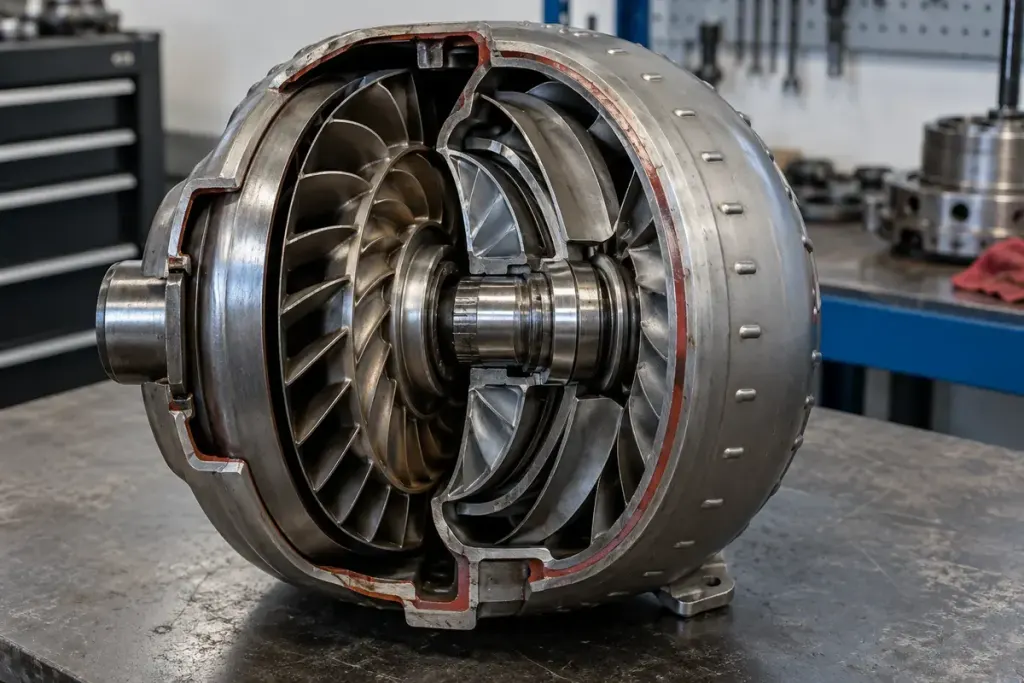
A conventional automatic transmission can use fluid to transfer engine power through a torque converter. Yet it does not need to rely on that fluid connection in exactly the same way throughout a journey. A lock-up clutch provides a more direct mechanical connection when the transmission’s control system calls for it.
ZF’s explanation of passenger-car clutch and converter components includes the lock-up clutch and associated damping. The parts work together; “the converter locks” is shorthand for a controlled change inside an assembly, not the whole gearbox becoming a rigid object.
Two ways of passing the effort along
With the lock-up clutch released, the converter’s fluid flow transfers torque between its rotating components. When the clutch is applied, it establishes a mechanical path that can reduce the losses associated with converter slip. Some systems also control a small amount of slip rather than behaving as a simple on/off switch.
When this happens depends on the particular vehicle, transmission, temperature, load and control strategy. It is not safe to infer a universal engagement speed from one car or an online discussion.
As a passenger, you may notice an engine-speed change without an obvious gear change. That observation alone does not identify which clutch, ratio or control action caused it. Modern powertrains coordinate several processes that can feel similar from the seat.
A better note for a workshop
If a new vibration or shudder appears, record when it happens rather than naming a failed component. Useful details include whether the vehicle is warm, the approximate road speed, whether you are accelerating or holding a steady pace, and any warning message. Make notes after stopping safely; do not conduct distracting road tests.
A technician may need diagnostic data, a road assessment and checks specified for that transmission. Engine faults, tyres and other driveline components can also cause vibration. A fluid change or additive chosen from a symptom alone is not a reliable diagnosis.
Use the exact vehicle and transmission identification when looking for service information. Understanding lock-up gives you a clearer question to ask, while leaving the actual fault-finding to evidence from the car.