
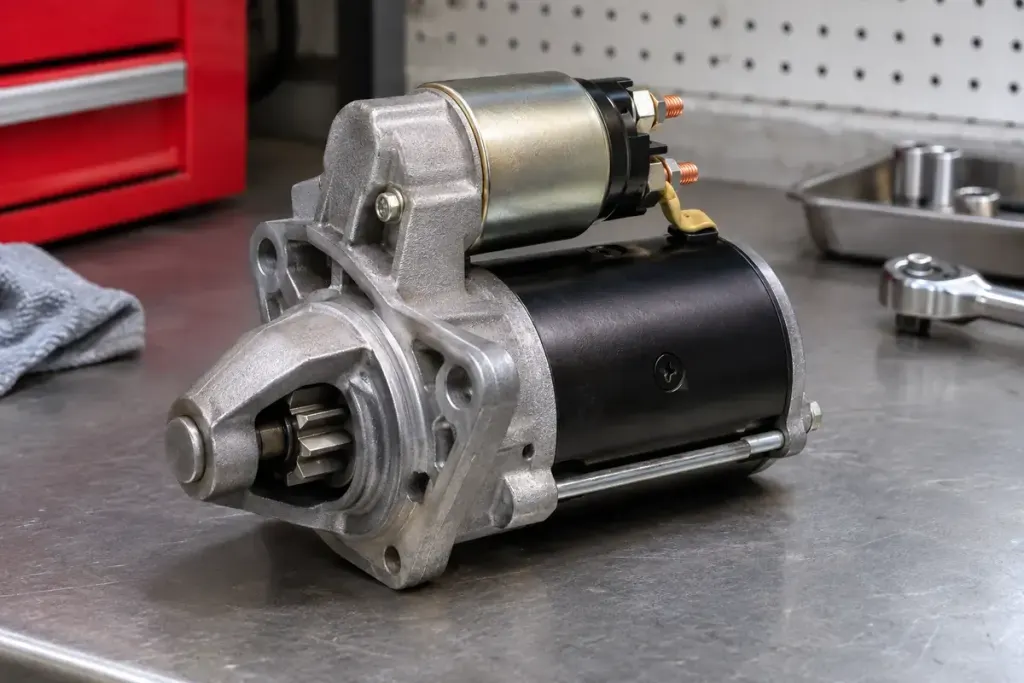
A small turn of a key or press of a button asks the starting system to do a heavy electrical job. In many conventional starter assemblies, the solenoid provides the link between that control request and the motor that turns the engine.
Two actions in one assembly
A typical pre-engaged starter uses an electromagnetic solenoid to move the drive mechanism into engagement and close contacts supplying substantial current to the motor. The exact arrangement varies by vehicle, so a generic drawing is an introduction rather than a wiring guide for every car.
DENSO’s starter troubleshooting guidance treats the starter as part of a circuit that also includes the battery, connections and control system. That wider view matters when a vehicle fails to crank.
What a click can—and cannot—tell you
A click is an observation. It does not, on its own, prove that the solenoid, starter motor or battery needs replacement. Record whether the sound is a single click or repeated clicking, whether the engine turns at all, and whether the symptom changes between attempts.
For example, “The dashboard lights came on, then there were several clicks and no engine movement” is more useful to a technician than “the solenoid is dead.” The first account preserves evidence; the second may prematurely narrow the diagnosis.
Prepare a better workshop description
Note when the problem occurs: first start of the day, after a journey or unpredictably. Mention recent battery work, electrical repairs or unusual warning messages. If the vehicle has a hybrid or another specialised starting arrangement, identify the model accurately rather than assuming it uses the conventional assembly pictured online.
Do not bridge starter terminals or work underneath an unsecured vehicle to test a theory. High-current circuits and unexpected movement require proper procedures and equipment.
Ask the workshop what checks supported its diagnosis and whether the relevant connections and supply were tested. Understanding the solenoid’s job helps you follow that explanation. It should make the conversation more precise, not turn a sound heard from the driver’s seat into a component-level verdict.