
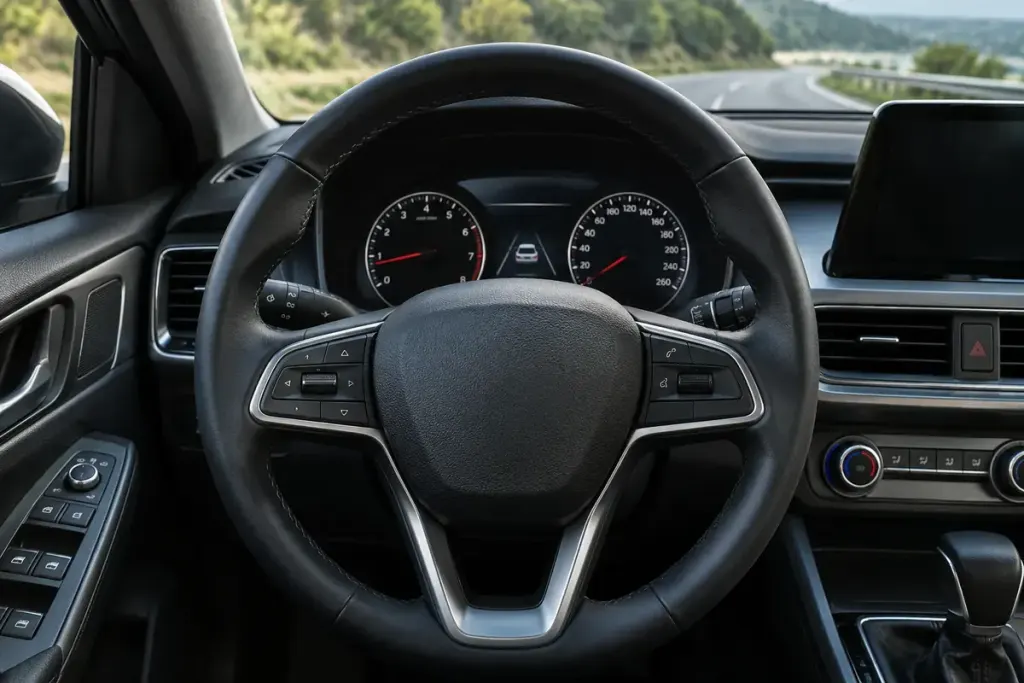
The same car can require little steering effort in a parking space and feel firmer on a faster road. With speed-dependent assistance, that change can be part of the design.
Volvo’s V90 manual provides one example: assistance makes low-speed manoeuvring light, while steering effort increases with road speed. The details belong to the model and its settings, rather than a rule that every vehicle follows identically.
What is actually changing?
The system changes the help supplied to the driver. That should not be confused with changing the steering ratio or making the rear wheels steer. Those features may exist on some vehicles, but a heavier steering feel alone does not establish that either is fitted.
Can a driving mode change the feel?
Some cars provide a steering-effort setting within a driving mode or a separate menu. Read the manual and adjust it only in the circumstances the manufacturer permits. When comparing settings, keep the route and conditions ordinary and safe; there is no need for abrupt manoeuvres.
On a used-car test drive, note the selected mode before deciding that one example feels very different from another. Tyres, loading, road surface and vehicle condition also belong in a proper assessment.
When should a change be checked?
A sudden loss of assistance, a warning message, sticking, unusual noise or a new pull should not be dismissed as normal speed-sensitive steering. Stop safely when necessary, read the warning instructions and arrange qualified attention.
For an intermittent concern, record the speed range, warning text and whether it occurred during parking, after repeated manoeuvres or during ordinary driving. Do not repeatedly reproduce a potentially unsafe fault just to collect more evidence.
A useful ownership habit is knowing the normal feel of your own car and where its steering information is documented. That makes a genuine change easier to describe without trying to diagnose it from effort alone.