
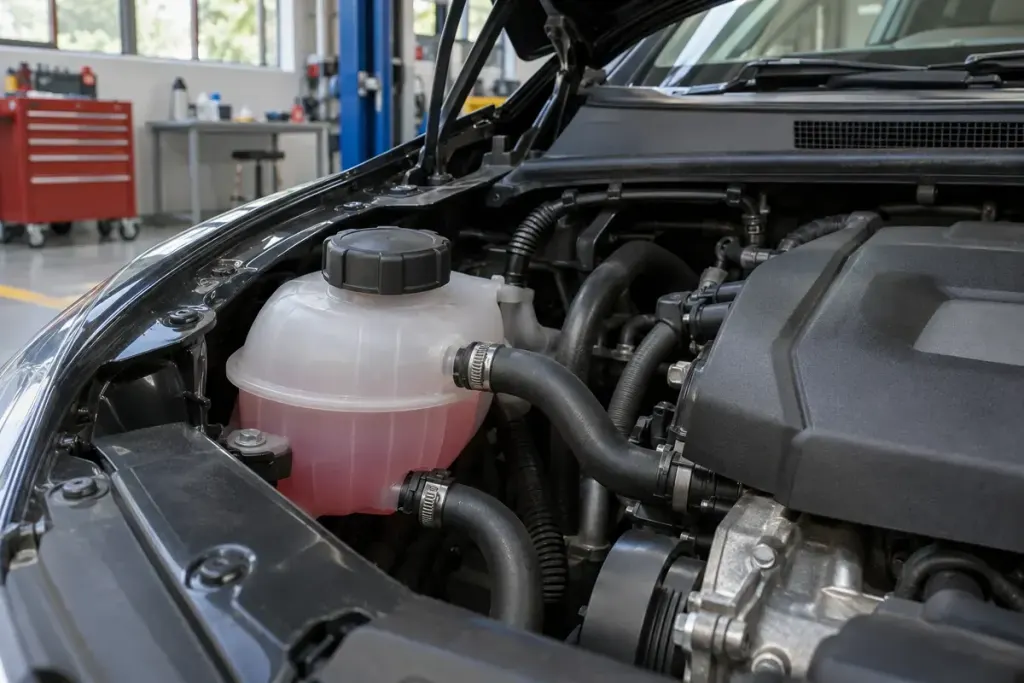
A modern engine’s cooling system may do more than send the same flow around every hot part. Separate circuits and controlled flow can allow different parts of the engine to warm up or shed heat according to their needs.
Volkswagen’s technical description of an earlier Golf powertrain generation gives a concrete example: its TDI discussion describes separate circulation loops for the cylinder head and crankcase during warm-up, alongside a deactivatable water pump. The page also discusses other engine layouts, so its details must be matched to the correct engine rather than combined into one imaginary system.
Think in routes, not just in one radiator
The broad idea is to manage where coolant travels and when. A cylinder head, engine block, charge-air cooler and cabin heater do not necessarily share identical temperature requirements or flow arrangements. A particular vehicle may use valves, pumps and control logic to manage those differences.
That makes a single dashboard indication an incomplete map of the system. It also means that a diagram for a related engine can be misleading if the cooling architecture changed between variants. Begin with the engine code and the manufacturer’s documentation when asking a workshop to explain a concern.
Describe symptoms without inventing a diagnosis
If cabin heat is slow to arrive, record when it happens, the outside conditions and whether any warning appears. If the coolant level changes, report the observed change and any visible leak from a safe position. Those observations are more useful than declaring a particular valve faulty because a diagram on a forum looks similar.
Never open a hot pressurised cooling system to investigate its routes. Follow the vehicle’s warning instructions and use qualified service help for overheating, leaks or persistent temperature concerns. Correct coolant, filling and bleeding procedures are model-specific.
A split cooling explanation is most useful as a question to take into the workshop: which circuit is involved, how was it checked, and what evidence supports the proposed repair? It helps you understand the system without replacing the diagnostic procedure needed for your actual car.