
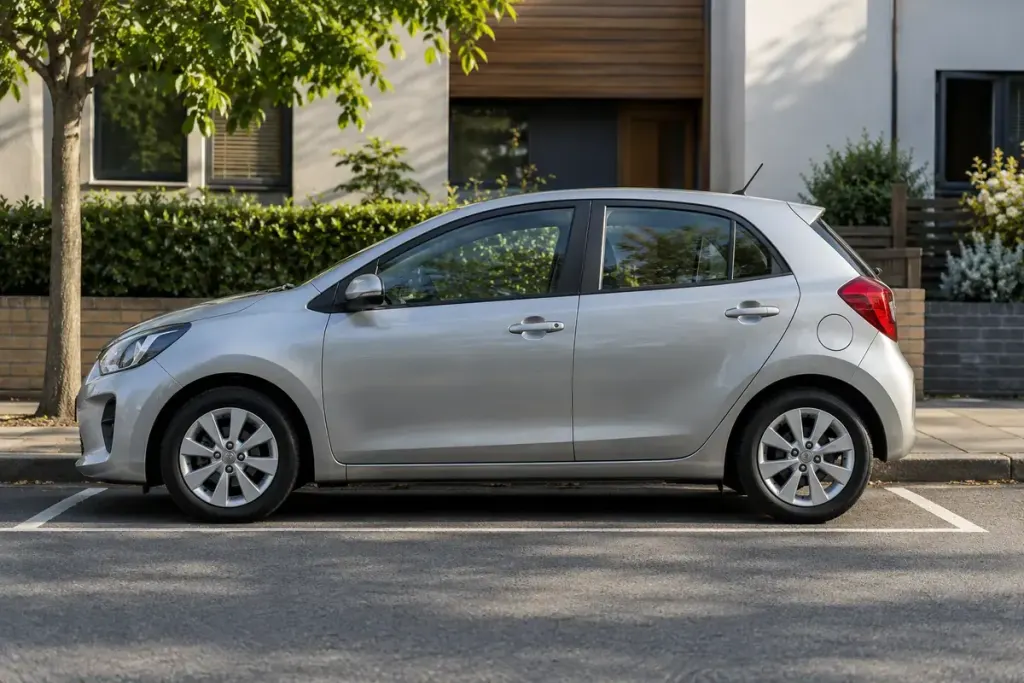
Two cars can have similar wheelbases yet occupy different amounts of a parking space. Wheelbase measures the distance between the front and rear axle centres. Overall length extends across the vehicle’s body from front to rear, including the overhangs beyond those axles.
For an illustrative comparison, imagine two cars with the same axle spacing but one with a longer rear body section. Their wheelbases match, while the space needed behind the rear wheels does not. These are conceptual examples, not specifications for a particular model.
Match the measurement to the question
- Will the car fit inside the garage?
- Start with overall dimensions and the usable space, including fixed cupboards, doors and other obstructions.
- Can people get out comfortably?
- Check door-opening space and the actual position of walls or adjacent vehicles.
- Can it turn into the space?
- Consider the access route and turning information; length alone does not describe the manoeuvre.
Use the manufacturer’s specifications for the exact version you are considering. Accessories and body variants can change dimensions. Also check whether the stated width includes mirrors, because that distinction matters at a narrow entrance.
Measure the real parking area rather than relying on a nominal bay size. A sloping approach, a low beam or a gate that opens inward can reduce usable space. Leave sensible clearance instead of planning around a theoretical millimetre-perfect fit.
Where a safe, authorised trial is possible, approach slowly with appropriate assistance and stop if visibility or clearance is uncertain. Do not use a speculative measurement as permission to attempt a risky manoeuvre.
Keep a simple sketch showing the entrance, obstructions and walking route. Pair it with the vehicle’s verified dimensions. Wheelbase helps describe the layout of the car; deciding whether it works at home requires the whole shape and the people moving around it.