
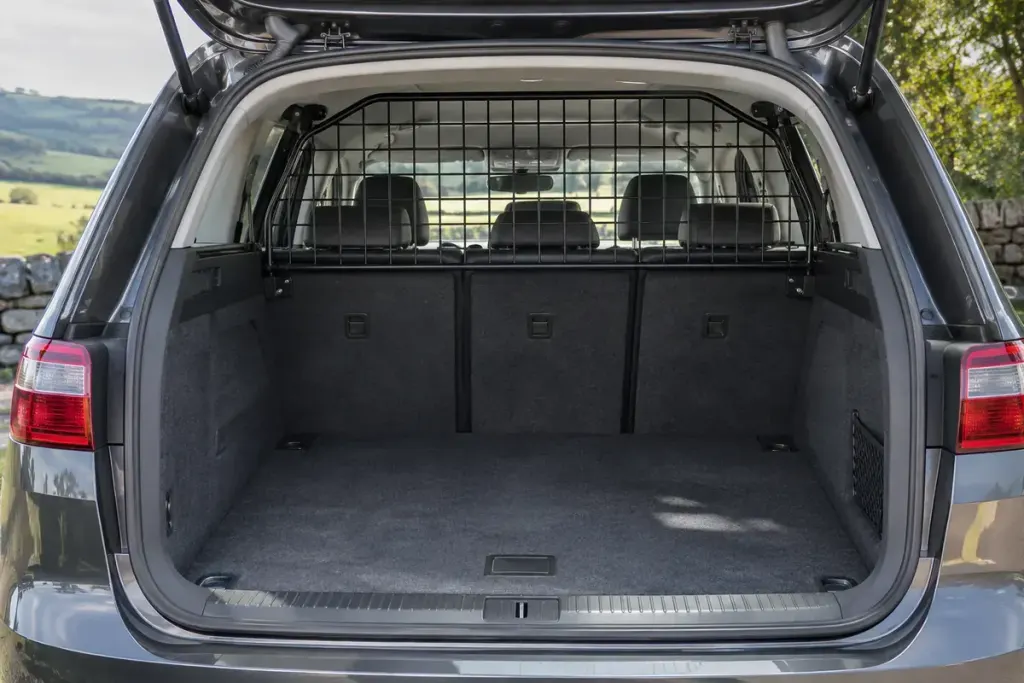
A metal screen behind the seats can look reassuring. Its appearance does not tell you whether it is suitable for that vehicle, how it has been attached or what loading arrangement its instructions allow.
A purpose-designed cargo barrier is different from a convenient divider or a pet accessory. Milford explains the protective purpose of its vehicle barriers in its cargo-barrier guide. That does not make every screen equivalent: the specific product’s tested application and fitting instructions remain essential.
Match more than the model name
Check the vehicle year, body variant and seat configuration against the manufacturer’s application list. Confirm which position the barrier is designed to occupy and whether moving or folding seats changes the permitted arrangement. A used barrier without its complete fitting kit and instructions leaves important questions unanswered.
Ask an authorised installer to identify the required mounting points. Do not improvise attachments to convenient trim, seat parts or drilled holes. The force path through the installation matters, even when the visible screen appears rigid.
Before purchase, write down what you intend to carry: for example, a folding trolley, two cases and small loose tools. This gives the installer a concrete situation to assess rather than the vague question of whether the barrier is “strong”.
Keep the load itself under control
A barrier does not remove the need to follow the vehicle’s loading limits and secure cargo appropriately. It also does not justify placing loose objects in passenger space on its other side. Consider how doors open, how the load is removed and whether access to safety equipment remains clear.
After any collision, visible damage or loosening, have the installation assessed according to the product instructions before relying on it again. Keep the model identification and fitting documents with the vehicle records. Those details are far more useful at resale or inspection than a photograph showing that a screen was once present.