
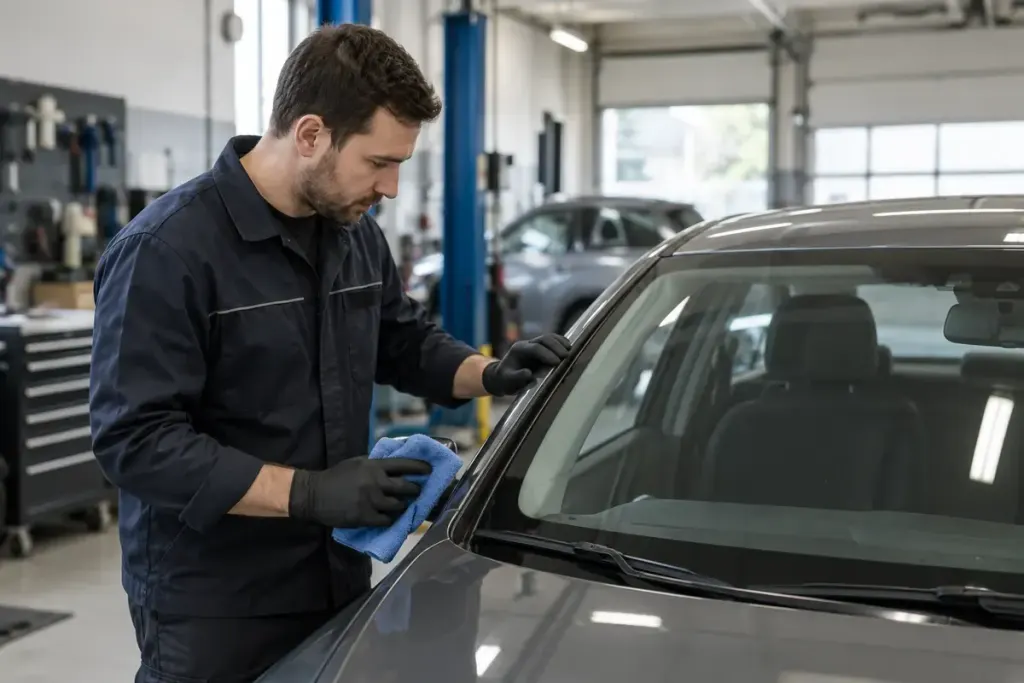
The new windscreen is clean, dry and free of distortion. That is important, but on a vehicle with a camera mounted near the glass, the job may also involve the driver-assistance system. A clear view for the driver does not prove the camera is correctly calibrated.
Requirements depend on the exact vehicle and repair. Ask the repairer to identify the manufacturer’s procedure for your model rather than accepting a general assurance that all windscreens are handled the same way.
Make calibration part of the quote
As one model-specific example, Toyota’s 2026 bZ driving-support instructions state that the front camera requires recalibration after windscreen replacement. That instruction should not be treated as a complete procedure for a different car.
Ask whether the quoted work includes the required calibration, who performs it and how completion is documented. If another workshop must do it, clarify the handover and what restrictions apply before that work is completed.
Collect evidence of completion
The invoice should make the work understandable. Request the relevant calibration or diagnostic report where provided, along with the glass specification and any follow-up instructions. Ask the repairer to explain unresolved warnings rather than merely clearing them without an explanation.
Check the vehicle’s handbook for any limits on the affected assistance features. These systems do not replace attentive driving, and a lack of a dashboard warning is not your own proof that calibration was performed.
Do not try to test emergency braking by driving towards an obstacle or person. If a system behaves unexpectedly after the repair, follow the manufacturer’s guidance and contact the repairer promptly. Arrange safe inspection rather than experimenting on a public road.
Keep the paperwork with the vehicle history
A future owner or workshop may need to know that the glass was replaced and what related work followed. Store the dated record with other maintenance documents.
The useful question at collection is simple: “What shows that every manufacturer-required step for this replacement has been completed?” It moves the conversation beyond the appearance of the glass to the systems that rely on it.