
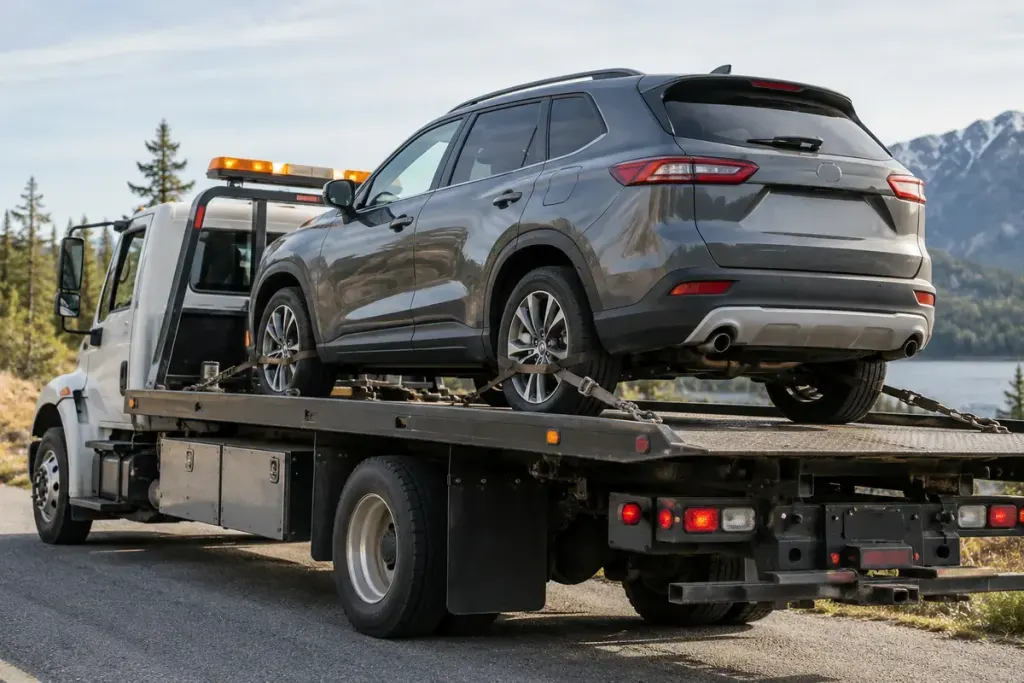
A tow vehicle arrives and the immediate question is where to attach it. For an all-wheel-drive car, another question comes first: which wheels, if any, may rotate on the road during recovery?
The answer depends on the exact vehicle and procedure. Manufacturer instructions vary. For example, this Ford owner-information document specifies keeping all wheels off the ground for the AWD recovery arrangement it describes. That is a model-specific example, not a rule to apply indiscriminately to every AWD vehicle.
Give the operator precise vehicle details
Provide the make, model, year, drivetrain and any relevant electric or hybrid configuration. Describe the fault and whether the vehicle can enter the required towing or transport mode. A badge or a remembered description may not identify every relevant variant.
Find the towing or recovery section in the correct owner manual. Distinguish emergency recovery from recreational towing behind another vehicle; the instructions can address different situations.
Do not improvise a neutral procedure
Selecting neutral does not by itself establish that road-wheel rotation is permitted. Follow the manufacturer’s preparation steps and have the operator choose suitable equipment. If the approved procedure cannot be completed because of the fault, the recovery method needs reassessment.
Ask the operator to explain how the proposed setup meets the vehicle’s requirements. If there is uncertainty, consult the manufacturer or qualified recovery support before moving the car.
Keep people out of traffic and follow local roadside-safety guidance while arrangements are made. Do not crawl beneath a damaged or inadequately supported vehicle to look for attachment points.
Saving the correct manual section before a breakdown can make the conversation much easier. The purpose is to supply reliable information to the recovery professional, not to turn a stressful roadside stop into an improvised towing experiment.