
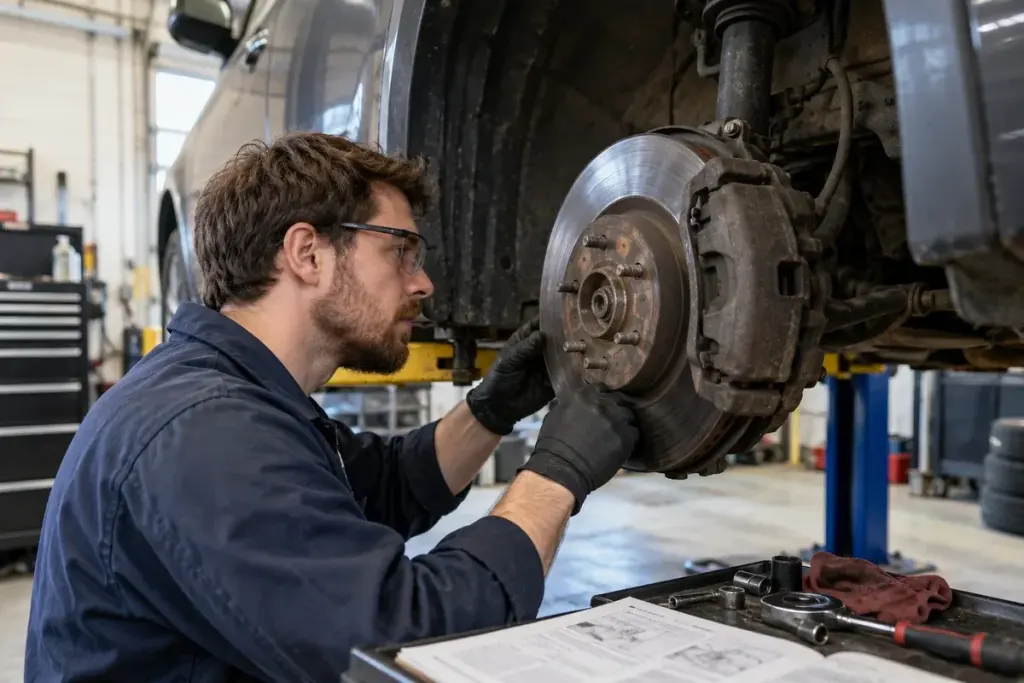
A steering wheel that shudders under braking can make an otherwise familiar car feel unpredictable. The tempting response is to search the symptom and order the part most often mentioned. A better first step is to describe what happened and arrange an appropriate inspection.
Vibration alone does not identify a single fault. The RAC’s explanation of shaking during braking discusses several possible causes. A workshop needs to assess the actual vehicle, including related components, rather than diagnose it from a phrase such as “warped discs.”
Useful observations, without another test drive
Think back to the journey on which the problem appeared. Was the vibration felt through the pedal, the steering wheel or the body? Did it occur only while slowing, or was it also present while travelling without braking? Note any warning lights, pulling to one side, unusual noise or change in stopping performance.
These are observations to pass on, not an invitation to recreate the problem at speed. Do not perform repeated hard stops to produce better evidence. If braking feels reduced, the car pulls strongly, a serious warning appears or the vehicle seems unsafe, stop in a safe place and seek roadside assistance. Avoid continuing a journey simply because the destination is close.
Give the workshop the recent history
Mention recent wheel, tyre, brake or suspension work, even if it seems unrelated. Include when the symptom began and whether it changed suddenly. A short account such as “the steering wheel shook during ordinary slowing after the wheel service” is more useful than an unsupported conclusion about which component must be replaced.
Ask the technician to explain the inspection findings and the reason for any proposed repair. If several parts are recommended, request a distinction between the cause of the reported problem, related wear and optional maintenance. Keep the estimate and inspection notes with the service record.
After repair, follow the workshop’s instructions, including any bedding-in guidance that applies to the installed parts. If the original symptom returns, report it promptly with the previous job details. A good maintenance decision connects the symptom, the inspection evidence and the repair; it does not jump straight from an internet description to a shopping list.