
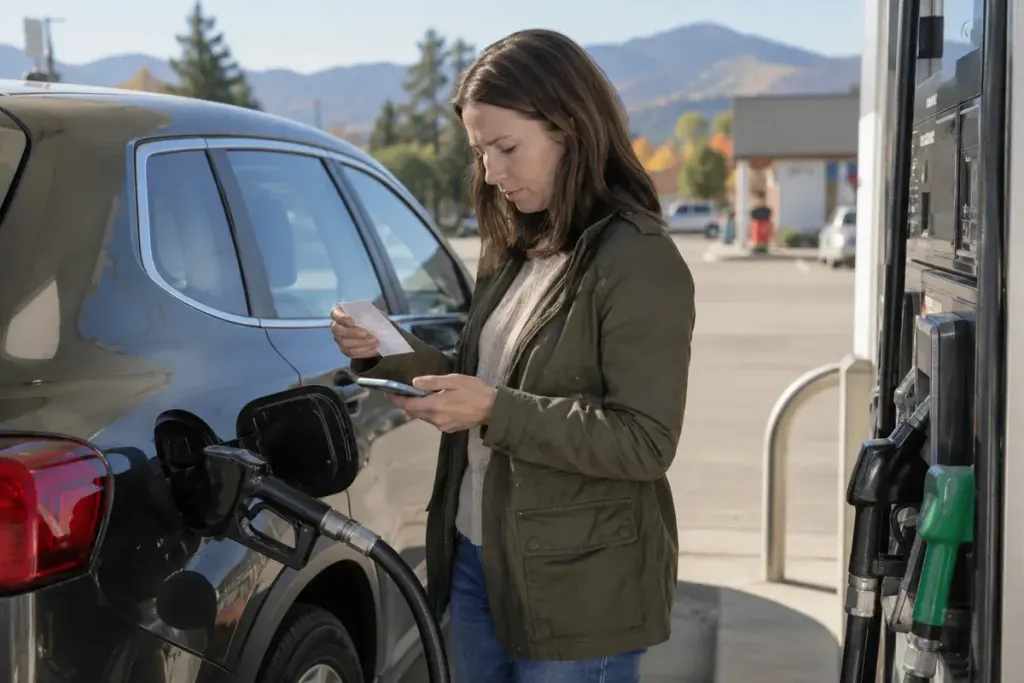
The dashboard consumption figure rises sharply in traffic and falls on an open road. That moving estimate is useful, but a longer record answers a different question: how much fuel did the car use across the journeys you actually made?
Use a consistent fill-to-fill record
At a normal fill, record the odometer reading. At the next comparable fill, record the new reading and the fuel added. Follow the pump and vehicle instructions; do not keep topping up after the normal automatic stop to force an exact level.
In a simplified example, the car travels 480 kilometres between fills and takes 36 litres at the second fill. Consumption is 36 divided by 480, multiplied by 100: 7.5 litres per 100 kilometres. The reciprocal measure is about 13.3 kilometres per litre. Label the unit clearly because a larger number means worse economy in the first measure and better economy in the second.
A single interval is imperfect. Different pump cut-offs, parking angles and incomplete fills can distort it. Combine several consistent intervals by dividing total litres by total distance rather than averaging unrelated dashboard readings.
Add context before drawing a conclusion
Record unusual traffic, short journeys, heavy loads, roof equipment and major weather differences. Do not declare a mechanical fault—or a miraculous improvement—from one tank. A changed route may explain more than the fuel brand.
If consumption worsens persistently under similar conditions, check routine items against the handbook and discuss the record with a qualified workshop. Warning lights, fuel smells or visible leaks call for appropriate attention regardless of the calculated average.
The purpose is a reliable ownership record. You should be able to show how the number was obtained and what changed, rather than trying to drive unsafely to make a display look better.