
Most explanations of engine valves begin with a cam opening a valve and a spring returning it. Desmodromic valve gear gives the closing movement mechanical control as well. The unusual name identifies that operating principle, not a different kind of fuel or combustion cycle.
Ducati’s explanation of its desmodromic camshafts describes paired cam lobes that guide the opening and closing movements. It provides a clear manufacturer example of how the two directions are controlled.
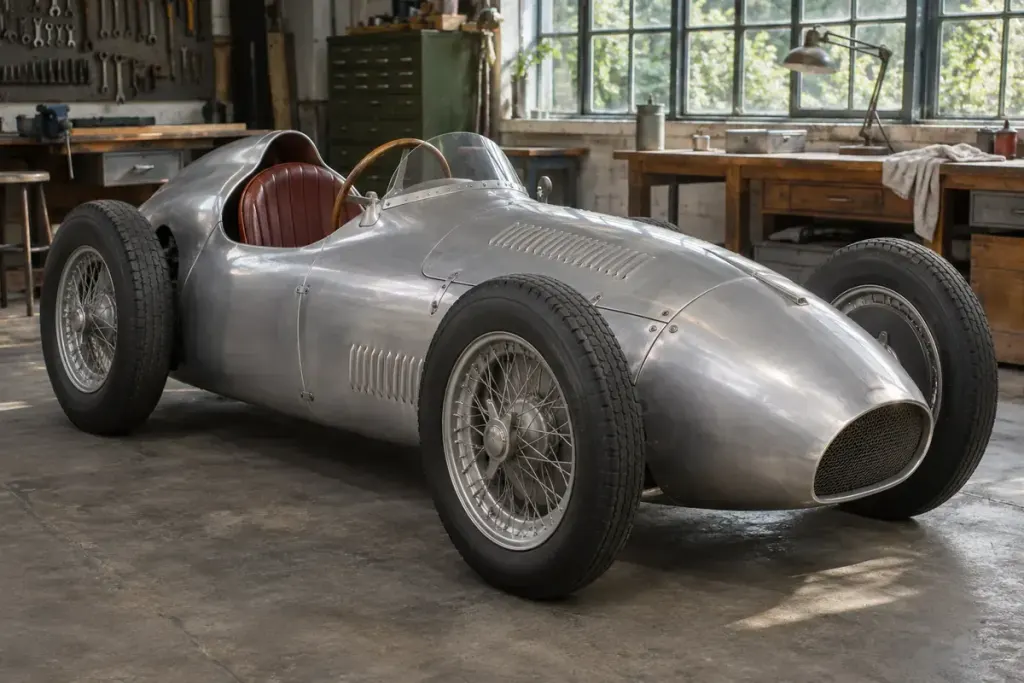
The principle also has a place in car history. The Fangio Museum’s description of the Mercedes-Benz W 196 R identifies desmodromic valve operation in that racing car. The modern motorcycle example explains a mechanism that is not confined to motorcycles.
Follow the valve through one cycle
Imagine watching a demonstration model slowly. First, identify the valve and the path along which it moves. Then find the mechanism that opens it and the one that controls its return. Following one valve is easier than trying to understand every moving component at once.
The closing mechanism is the distinctive feature to look for. Do not identify a system from the number of camshafts alone. An engine can have multiple overhead camshafts without using desmodromic control.
Separate the principle from a performance claim
Ducati’s Panigale V4 technical overview connects its desmodromic system with precise control at high engine speeds. That describes a particular design application. It does not prove that every engine using the principle will outperform every spring-return engine.
Power, durability and usability depend on the complete engine and its intended duty. A mechanism can have advantages for one design while introducing its own complexity and service requirements.
Use the term carefully when reading specifications
For an engine comparison, record valve actuation separately from displacement, cylinder layout, valve count and variable-timing features. Those labels answer different questions. A brochure can mention several together without explaining which feature performs which job.
If you own a vehicle with this system, follow its model-specific service schedule. Do not infer an adjustment procedure or interval from another engine that shares the word “desmodromic.” Clearances, tools and checks belong to the actual design.
The most useful takeaway is a visual one: look for a controlled closing path as well as an opening path. Once that distinction is clear, the rest of the technical description becomes easier to place.