
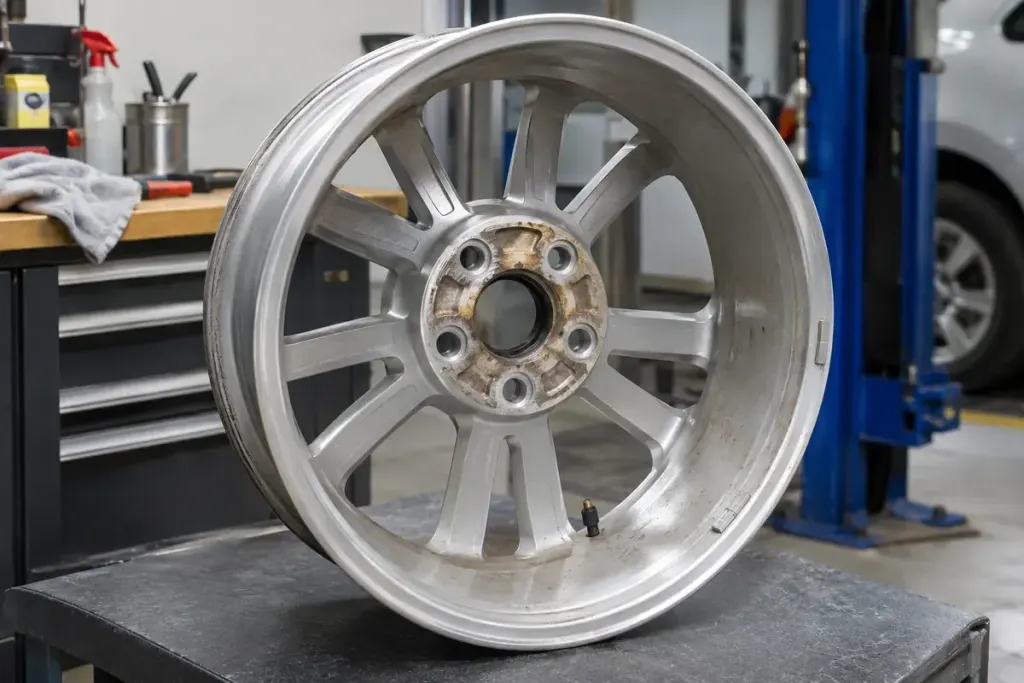
A replacement wheel can have the correct diameter and bolt pattern yet sit differently in the wheel arch. Offset is one reason. It describes where the wheel’s mounting face lies relative to the rim’s centre line.
OZ Racing’s guide to wheel markings identifies ET as the offset measurement. The number is commonly expressed in millimetres. Positive and negative offsets place the mounting face on different sides of the centre line, so the sign belongs with the number.
Compare width and offset together
Changing offset while keeping the same width moves the rim relative to the hub. Changing width affects both edges as well. A comparison that looks only at ET can therefore miss the extra space occupied by a wider rim.
For a simplified illustrative comparison, two equal-width wheels with offsets differing by 5 mm sit 5 mm differently relative to the hub. That arithmetic describes position; it does not establish that either wheel is approved or safe for the car.
Clearance has to survive movement
A stationary wheel that appears to clear the bodywork is not a complete fitment check. Steering movement, suspension travel, brake components, tyre dimensions and the wheel’s internal shape all matter. Load rating, centre bore, fastener type and vehicle-specific approvals also remain part of the selection.
Ask a qualified wheel specialist to assess the complete combination for the exact vehicle. Provide the existing wheel markings and tyre size, then request the proposed specification in writing. Do not treat an online photograph of a similar car as proof that the same setup fits yours.
Spacers introduce further requirements involving fastener engagement, hub location and approvals. They should not be used as an improvised correction for a wheel bought on diameter alone.
Keep the final fitment information with the vehicle records. If vibration, rubbing or an unusual steering response appears after a change, have it checked promptly. The ET number is valuable because it explains one part of the geometry; it works best alongside the rest of the specification, not as a shortcut around it.