
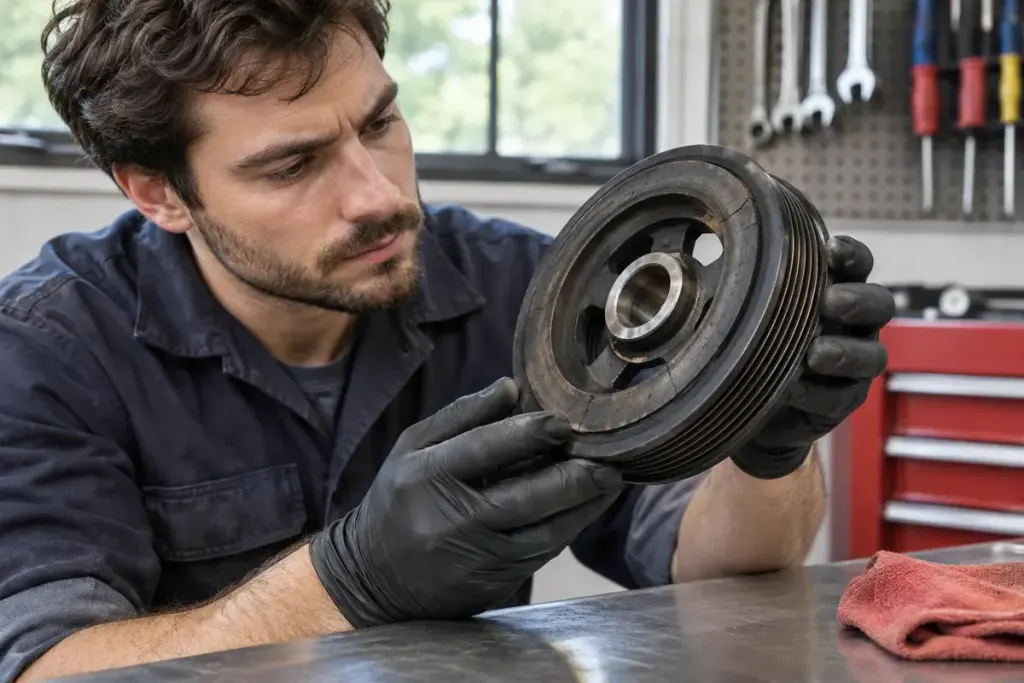
A workshop mentions a crankshaft pulley with a deteriorated rubber section. That can sound like a minor accessory until you learn that the part may also be a torsional vibration damper. Its purpose involves the twisting motion produced as the engine delivers successive firing pulses.
Gates’ technical bulletin on torsional vibration dampers describes a design in which a rubber element connects metal sections of the pulley. The element helps damp vibration affecting the front-end accessory drive. Component designs vary, so the actual engine specification matters.
Do not identify the fault by sound alone
A noise near the belt drive is a reason for a proper inspection, not proof that this one part has failed. Belts, tensioners, pulleys and other components need to be considered in the diagnosis. Keep hands, clothing and tools away from a running engine.
For a useful workshop conversation, ask which component was inspected, what evidence supports the diagnosis and whether related parts were checked. Request the correct replacement specification for the vehicle rather than shopping only by a similar photograph.
Keep symptoms and conclusions in separate notes
A practical owner’s note begins with what you noticed: when the noise occurs, whether the engine is cold or warm, and whether a warning appeared. Leave the technical conclusion to the inspection. A short recording made safely may help describe an intermittent symptom, but it does not replace the examination.
If the workshop advises against further driving, ask what recovery arrangement is appropriate. Do not keep testing a suspected failing rotating component to see whether it becomes more obvious.
After repair, keep the part reference and service findings with the vehicle records. This helps distinguish a confirmed replacement from an earlier suspicion if a different noise appears later.
The word damper is the important clue: this pulley can have a vibration-control role as well as carrying the belt. Understanding that role makes the repair discussion more precise without turning it into a roadside disassembly task.