
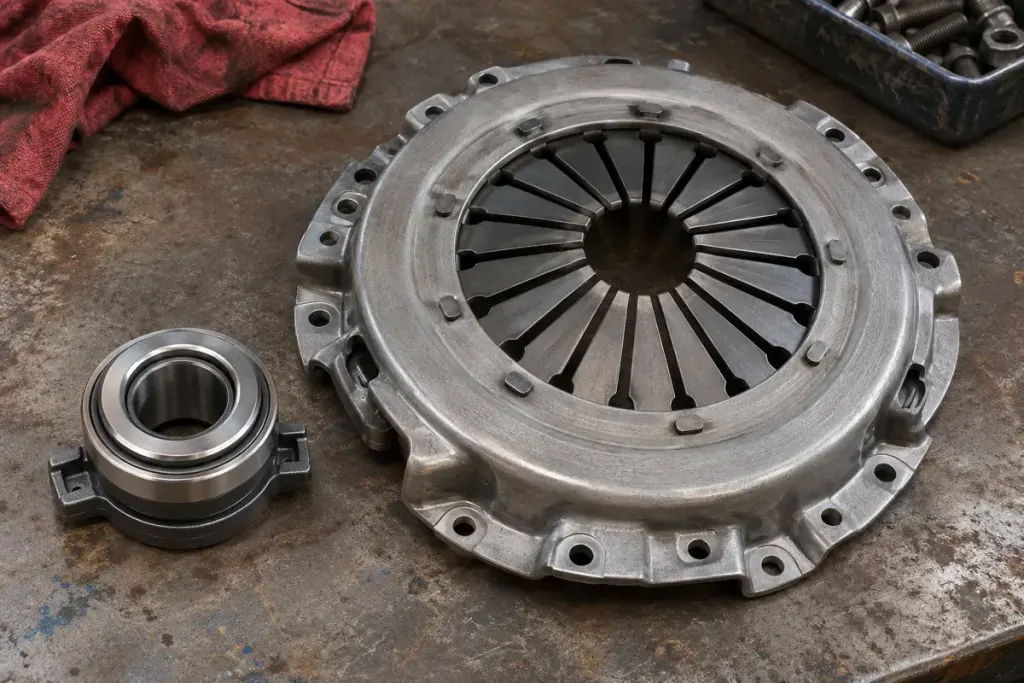
Pressing a clutch pedal asks a stationary operating mechanism to act on a rotating assembly. The release bearing helps that contact happen while transmitting the force needed to disengage the clutch. It is a small component with a very specific place in the chain.
Schaeffler’s release-bearing overview describes bearings and complete release units, including designs that help distribute load at the clutch diaphragm spring. Different vehicles package the operating mechanism differently, so a photograph of one assembly does not identify the parts in every car.
Follow the force, not just the pedal
The driver operates the pedal, the release system transmits that input, and the bearing acts at the clutch’s release mechanism. Disengaging the clutch interrupts normal drive transmission sufficiently for the intended operation. Releasing the pedal allows the clutch to engage again.
This bearing is different from a wheel bearing and from other bearings inside the gearbox. The word bearing describes a type of mechanical job, not one interchangeable replacement part.
Describe a symptom without diagnosing it
If a new sound appears, note whether it happens with the pedal released, moving or held down. Also record whether the vehicle is stationary, whether the engine is running and whether gear selection has changed. Give those observations to the workshop without repeatedly provoking the noise.
A sound changing with pedal position can guide an inspection, but it does not prove that the release bearing alone is responsible. Other clutch, hydraulic or transmission components may need attention. Avoid ordering a part solely from a sound description on a forum.
Ask the technician which assembly is fitted and what inspection supports the proposed repair. If a bearing is integrated with another component, the replacement scope may differ from a separate-bearing design.
Follow the vehicle handbook and arrange prompt assessment when clutch operation changes. Difficulty selecting gears, abnormal pedal behaviour or loss of drive deserves more than a cosmetic explanation. Understanding the bearing’s role helps you describe the problem clearly while leaving the diagnosis to an appropriate inspection.