
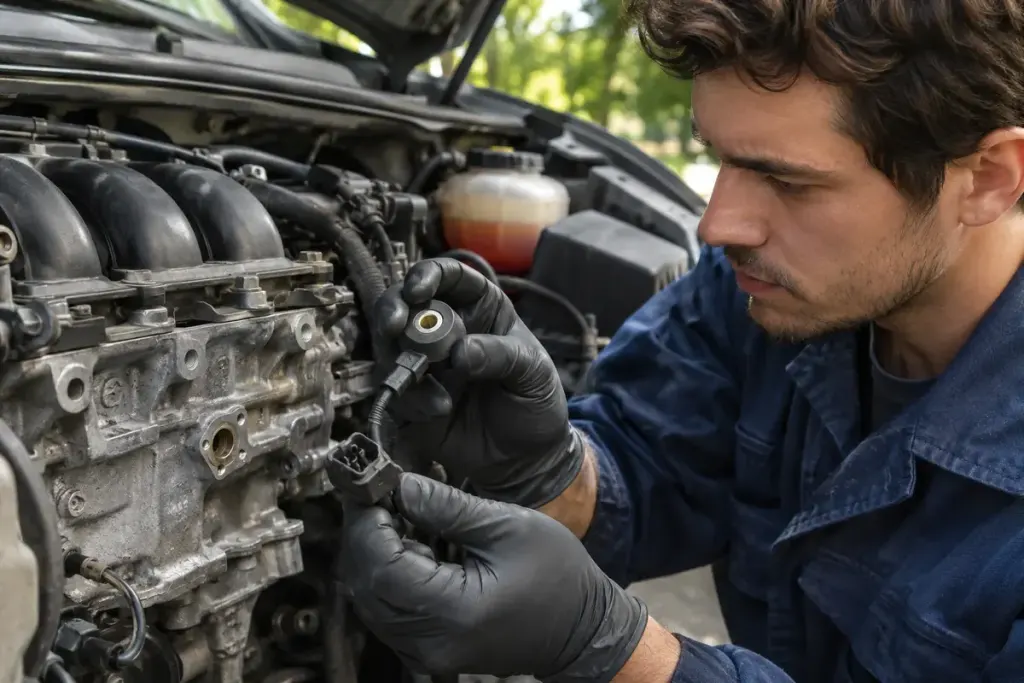
An engine control unit cannot put an ear against the block. A knock sensor supplies a different kind of listening: it detects structure-borne vibration and converts that activity into an electrical signal.
Bosch describes a piezoelectric sensor mounted on the crankcase that identifies frequencies associated with knocking. The control unit can then adjust ignition timing. This is a measured feedback process, not a microphone deciding whether the engine sounds pleasant.
Detection is not permission to ignore the fuel specification
The presence of knock control does not replace the fuel requirements in the owner’s manual. Use the specified fuel and follow the manufacturer’s guidance if the engine develops unusual noise or a warning. Deliberately provoking knock to “test the sensor” is not an appropriate owner check.
Nor does every tick or rattle establish a knock-sensor problem. A workshop needs the vehicle details, operating conditions and diagnostic information to distinguish possible causes.
Give the technician a useful account
Write down when the symptom appears: cold start, warm idle, acceleration or a particular load. Note warning lights, recent fuel stops and any work performed shortly before it began. Describe what you observed without labelling it as a confirmed failed part.
For example, “a brief metallic sound during uphill acceleration after the last refill” is more informative than “the knock sensor is bad.” The first preserves evidence; the second starts with a conclusion that may be wrong.
If a diagnostic reader displays a sensor-related code, save the exact code and associated information rather than clearing it immediately. A code identifies a condition the system detected; it does not, by itself, prove that replacing the named component will fix it.
Ask the workshop what was tested and what supported the repair decision. That conversation connects the sensor’s role to the actual fault, instead of turning a useful monitoring component into the default suspect for every unfamiliar engine sound.