
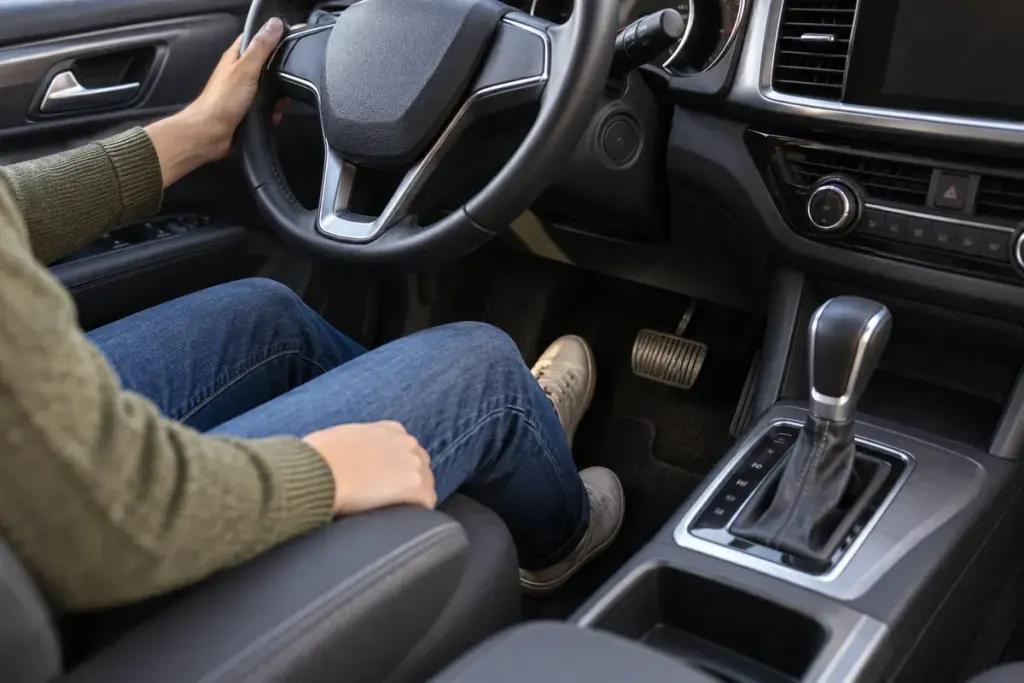
Release the brake in some automatic cars and the vehicle begins to move slowly without an accelerator input. In another car, it may remain still until a different control condition is met. Familiarity with one automatic does not settle how the next one behaves.
Creep depends on the system
In a conventional torque-converter automatic, drive can be transmitted at idle when a driving gear is selected. Other transmission designs and electric vehicles may create, modify or omit a similar low-speed behaviour through their controls. Auto Hold and driving modes can also affect what the driver experiences.
The 2023 Honda CR-V Hybrid manual, for example, explicitly describes creeping in that vehicle. Use the owner’s manual for your own model and year: a setting with a familiar name may operate differently, and a mode selected by a previous driver may still be active.
Understand the car before a tight manoeuvre
When taking over an unfamiliar vehicle, identify the selected gear, brake controls and any hold indicators while safely stationary. Ask the rental provider or seller to explain unfamiliar features before moving into a confined space.
Do not use the accelerator to hold the car on a slope. Follow the vehicle’s braking and parking instructions, and do not assume that creep will prevent rolling in the opposite direction. A driver-assistance feature is not a substitute for checking the surroundings and controlling the vehicle.
Keep people, pets and obstacles well clear during manoeuvres. If the behaviour differs unexpectedly from the manual, stop safely and seek qualified assistance rather than testing it repeatedly in traffic.
For your own notes, record the model, active mode and relevant manual section. “This car remained stopped because Auto Hold was active” is a more useful observation than “automatics do not move until you accelerate”.
The practical lesson is simple: know what happens when the brake is released before choosing a situation where a few centimetres of movement matter.