
Biasanya isi bensin:
sekian rupiah.
Dipakai beberapa hari.
Jarak tempuh:
kurang lebih sama.
Tiba-tiba minggu ini:
kok bensin lebih cepat habis?
Padahal:
rute masih sama.
Mobil yang dipakai sama.
Cara bawa rasanya juga tidak berubah.
Reaksi pertama sering:
“Mesinnya bermasalah nih.”
Belum tentu.
Konsumsi bahan bakar mobil dipengaruhi banyak hal.
Mulai dari:
tekanan ban,
macet,
beban kendaraan,
AC,
filter udara,
busi,
oli,
sensor,
sampai kebiasaan kecil saat menginjak pedal gas.
Masalahnya, beberapa faktor ini tidak langsung terasa ketika mengemudi.
Mobil masih:
nyala normal,
tidak brebet,
tidak ada lampu indikator,
tetapi konsumsi BBM mulai naik perlahan.
Konsumsi BBM Tidak Pernah Benar-Benar Tetap
Misalnya mobil biasanya mencatat:
12 km/liter.
Apakah setiap hari pasti 12?
Tidak.
Hari ini:
11,5.
Besok:
12,3.
Trip luar kota:
Macet total:
Normal.
Fuel economy berubah sesuai kondisi.
Jadi sebelum menyimpulkan ada kerusakan:
lihat trend.
Bukan satu kali isi bensin.
Cara Mengukur Konsumsi BBM Jangan Hanya dari Indikator
Jarum bensin atau bar digital di dashboard:
bukan alat pengukur presisi.
Tank shape tidak selalu linear.
Satu bar pertama bisa bertahan lama.
Bar berikutnya turun lebih cepat.
Kalau mau tahu konsumsi lebih akurat:
gunakan metode full-to-full.
Metode Full-to-Full
Isi tangki sampai titik yang konsisten.
Reset trip meter.
Gunakan mobil seperti biasa.
Isi penuh lagi.
Catat:
liter yang masuk.
kilometer yang ditempuh.
Formula:
jarak tempuh ÷ liter BBM = km/liter.
Contoh:
420 km ÷ 35 liter = 12 km/liter.
Lebih useful daripada:
“Kayaknya bensin gue lebih cepat turun.”
Catat Beberapa Kali
Satu tangki bisa terpengaruh:
traffic abnormal,
trip pendek,
jalanan menanjak,
atau banyak idle.
Ambil:
3–5 pengisian.
Lihat average.
Kalau consistently menurun:
baru investigate.
penyebab mobil boros bensin
Ada banyak penyebab mobil boros bensin, dan tidak semuanya berasal dari kerusakan mesin. Tekanan ban yang kurang, filter udara kotor, busi mulai lemah, oli yang tidak sesuai, beban kendaraan berlebihan, kemacetan, terlalu lama idle, penggunaan AC, sampai sensor mesin yang bermasalah dapat membuat konsumsi bahan bakar meningkat. Karena itu diagnosis sebaiknya dilakukan dari faktor paling sederhana sebelum menyimpulkan ada kerusakan besar.
Mulai dari yang murah.
Mulai dari yang mudah.
Tekanan Ban Terlalu Rendah
Ini salah satu penyebab paling sederhana.
Ban kurang angin:
rolling resistance meningkat.
Mesin perlu tenaga lebih besar untuk membuat kendaraan bergerak.
Efeknya mungkin tidak terasa dramatis.
Tapi dalam penggunaan harian:
fuel consumption bisa naik.
Kenapa Ban Kempis Membuat Mobil Lebih Berat?
Ban mengalami deformasi lebih besar saat menyentuh jalan.
Lebih banyak energi hilang.
Mirip naik sepeda dengan ban kurang angin.
Kayuhan terasa:
lebih berat.
Mobil mengalami prinsip yang sama.
Cek Tekanan Ban Saat Dingin
Jangan asal isi:
“35 psi semua.”
Ikuti rekomendasi kendaraan.
Biasanya ada sticker di:
door jamb,
fuel lid,
atau manual.
Front dan rear bisa berbeda.
Ban yang Terlalu Keras Juga Bukan Solusi
Ada orang menaikkan tekanan jauh di atas rekomendasi karena:
“biar irit.”
Bad idea.
Handling.
Grip.
Ride comfort.
Tire wear.
Semua bisa terganggu.
Gunakan specification yang benar.
Ukuran Ban Juga Berpengaruh
Ganti velg lebih besar.
Ban lebih lebar.
Bobot meningkat.
Rolling resistance berubah.
Aerodynamics bisa berubah sedikit.
Konsumsi BBM bisa ikut berubah.
Modification always has trade-off.
Ban AT atau MT pada Mobil Harian
SUV dimodif:
ban lebih agresif.
Looks cool.
Tapi tread besar dan berat bisa meningkatkan resistance.
Kalau sebagian besar penggunaan:
jalanan kota.
Jangan heran konsumsi berubah.
Wheel Alignment
Toe terlalu keluar atau masuk.
Roda seperti sedikit saling melawan arah.
Mobil masih jalan.
Tapi resistance naik.
Tanda lain:
setir tidak center.
ban aus tidak rata.
mobil menarik ke satu sisi.
Bearing Roda
Bearing mulai bermasalah bisa menciptakan resistance tambahan.
Biasanya ada gejala:
humming.
noise yang berubah mengikuti speed.
Ini bukan penyebab paling umum.
Tapi worth checking jika ada gejala.
Rem Seret
Caliper macet.
Brake pad tetap sedikit menjepit.
Mobil terasa seperti terus ditahan.
Fuel economy turun.
Setelah perjalanan:
satu roda bisa terasa jauh lebih panas daripada lainnya.
Ini perlu diperiksa.
Jangan Sentuh Disc Brake Langsung
Brake rotor bisa sangat panas.
Kalau curiga rem seret:
minta bengkel cek.
Jangan test pakai tangan langsung setelah berkendara.
Filter Udara Kotor
Engine membutuhkan:
air + fuel.
Kalau airflow terganggu:
engine management harus beradaptasi.
Pada kendaraan modern efek fuel economy tergantung sistem dan kondisi.
Tetapi filter yang terlalu kotor tetap bukan kondisi ideal.
Jangan Ganti Filter Setiap Minggu
Ikuti maintenance interval.
Check lebih sering kalau mobil sering digunakan di:
debu,
area konstruksi,
jalan tanah.
Filter Racing Tidak Otomatis Bikin Irit
High-flow filter sering dijual dengan claim:
power naik.
BBM irit.
Real result depends on engine.
Kalau filtration quality buruk:
risiko jangka panjang bisa lebih besar.
Jangan beli berdasarkan marketing saja.
Busi Mulai Lemah
Spark plug menyalakan mixture.
Kalau kondisinya sudah buruk:
combustion bisa kurang optimal.
Gejala mungkin:
idle kurang halus,
acceleration kurang responsive,
misfire,
fuel economy turun.
Busi Punya Interval
Nickel.
Platinum.
Iridium.
Service life berbeda.
Check manual.
Jangan tunggu mobil benar-benar brebet.
Gap Busi
Spark plug gap yang tidak sesuai dapat memengaruhi ignition performance.
Modern plugs sering tidak perlu di-adjust sembarangan.
Follow manufacturer specification.
Ignition Coil
Coil lemah bisa menyebabkan misfire.
Biasanya kalau sudah signifikan:
check engine light bisa muncul.
Engine terasa kasar.
BBM bisa boros karena combustion tidak normal.
Jangan Abaikan Check Engine
Mobil masih bisa jalan.
Tapi ECU mendeteksi masalah.
Scan.
Jangan hanya:
cabut terminal aki supaya lampu hilang.
Itu menghapus symptom display, bukan memperbaiki root cause.
OBD Scanner Sangat Membantu
Modern car punya diagnostic data.
Error code.
Fuel trim.
Sensor reading.
Technician bisa menggunakan data untuk mempersempit problem.
Guessing parts satu per satu:
mahal.
Sensor Oksigen
Oxygen sensor membantu ECU memahami combustion/exhaust condition.
Jika reading bermasalah:
fuel control bisa terganggu.
Konsumsi meningkat.
Emissions juga bisa berubah.
O2 Sensor Bukan Barang yang Diganti Berdasarkan Feeling
Diagnose.
Lihat code.
Live data.
Wiring.
Jangan langsung beli sensor hanya karena:
“Katanya bensin boros biasanya O2.”
MAF Sensor
Mass Air Flow sensor mengukur jumlah udara masuk pada kendaraan yang menggunakan sistem ini.
Sensor kotor atau faulty dapat memberikan reading salah.
ECU bisa menentukan fuel delivery yang kurang tepat.
MAP Sensor
Kendaraan lain menggunakan MAP sensor atau kombinasi beberapa sensor.
Again:
system differs.
Jangan apply satu tutorial ke semua mobil.
Throttle Body Kotor
Deposit dapat mengganggu airflow atau idle control pada beberapa kendaraan.
Symptoms bisa:
idle tidak stabil.
response throttle berubah.
RPM aneh.
Cleaning kadang membantu.
Tapi harus dilakukan sesuai procedure.
Electronic Throttle Bisa Membutuhkan Relearn
Setelah cleaning atau battery disconnect pada beberapa mobil:
ECU mungkin perlu relearn idle/throttle position.
Don’t assume semua mobil sama.
Injector Kotor?
Ini kata favorit bengkel.
“Injector kotor.”
Possible.
But injector issue harus dilihat dari:
spray pattern,
flow,
fuel trim,
misfire,
performance.
Jangan selalu melakukan injector cleaning tanpa indication.
Fuel Injector Bocor
Kalau injector leaking:
fuel berlebih bisa masuk.
Gejala:
hard start.
fuel smell.
rough idle.
poor economy.
Need inspection.
Fuel Pressure Terlalu Tinggi
Fuel system problem tertentu bisa menyebabkan terlalu banyak fuel delivered.
Again:
diagnosis needed.
Thermostat Mesin
Engine modern bekerja optimal pada temperature tertentu.
Kalau thermostat stuck open:
engine bisa terlalu lama berada di temperature rendah.
ECU bisa mempertahankan enrichment lebih lama.
Fuel economy dapat menurun.
Temperature Gauge Terlalu Rendah Terus?
Possible clue.
Tapi gauge banyak mobil dibuat cukup “buffered.”
Scan live coolant temperature lebih informative.
Coolant Temperature Sensor
Sensor memberi tahu ECU suhu engine.
Jika reading salah:
fuel strategy bisa salah.
Ini dapat menyebabkan:
boros,
starting issue,
fan behavior abnormal.
Mesin Belum Mencapai Suhu Kerja
Trip sangat pendek:
5 menit.
Mati.
Start lagi.
Mesin sering bekerja di fase warm-up.
Fuel economy akan lebih buruk daripada trip panjang.
Ini normal.
Short Trip Adalah Musuh Fuel Economy
Contoh:
rumah ke minimarket 1 km.
rumah ke sekolah 2 km.
berulang.
Engine terus start cold.
Tidak pernah mencapai steady efficient condition.
Konsumsi average bisa terlihat jelek.
Highway vs City
Highway steady speed:
engine bekerja lebih stabil.
City:
accelerate.
brake.
idle.
accelerate lagi.
Energy terus terbuang.
Jadi km/liter kota dan highway wajar berbeda jauh.
Macet Bisa Membuat Angka Drop Dramatis
Mobil bergerak:
3 km.
Mesin hidup:
45 menit.
Fuel tetap terbakar.
Distance kecil.
Math-nya jelas:
km/liter jelek.
Idling
Parkir.
Mesin hidup.
AC nyala.
30 menit.
Trip meter:
0 km tambahan.
Fuel:
tetap terpakai.
Kalau sering menunggu dalam mobil:
average consumption turun.
cara menghemat BBM mobil
Salah satu cara menghemat BBM mobil yang paling efektif adalah menjaga kondisi kendaraan tetap sesuai spesifikasi dan mengurangi pemborosan energi saat berkendara. Pastikan tekanan ban benar, servis dilakukan tepat waktu, hindari akselerasi dan pengereman yang tidak perlu, kurangi idle terlalu lama, dan pertahankan kecepatan secara halus ketika kondisi jalan memungkinkan.
Tidak perlu trik aneh.
Basic maintenance + smooth driving sudah sangat berarti.
Akselerasi Terlalu Agresif
Pedal gas diinjak dalam.
Engine load naik.
Transmission menahan gear rendah.
RPM meningkat.
Fuel consumption naik.
Accelerate dengan cukup cepat tetapi smooth.
Bukan harus super pelan.
Terlalu Pelan Juga Tidak Selalu Efisien
Ada orang berpikir:
“Semakin pelan semakin irit.”
Tidak selalu.
Engine punya operating efficiency range.
Gear.
RPM.
load.
Aero.
Semua memengaruhi.
Cruise terlalu lambat dengan gear yang tidak sesuai juga bisa inefficient.
Driving Smooth Lebih Penting
Look ahead.
Traffic light merah di depan?
Angkat gas lebih awal.
Jangan:
gas → rem keras.
Gas lagi → rem.
Setiap acceleration membutuhkan energy.
Anticipatory Driving
Lihat kendaraan 3–4 mobil di depan.
Traffic mulai slow?
Kurangi gas dulu.
Ini membuat:
lebih hemat.
lebih nyaman.
brake lebih awet.
Tailgating Membuat Driving Boros
Jarak terlalu dekat:
brake terus.
gas terus.
No room to coast.
Jaga following distance.
Safer + smoother.
Cruise Control
Di jalan datar:
bisa membantu maintain speed.
Di jalan rolling/hilly:
cruise control kadang aggressively membuka throttle untuk mempertahankan speed.
Driver yang halus bisa lebih efficient dalam kondisi tertentu.
Eco Mode
Eco mode biasanya mengubah:
throttle response,
AC strategy,
transmission behavior,
atau lainnya.
Bisa membantu.
Tapi bukan magic switch.
Kalau pedal tetap full throttle:
physics tetap physics.
Sport Mode
Throttle sharper.
Gear held longer.
RPM tinggi.
Fun.
Tapi generally bukan mode paling irit.
Use intentionally.
Transmission Manual
Gear terlalu rendah:
RPM tinggi.
Gear terlalu tinggi:
engine lugging.
Keduanya tidak ideal.
Gunakan gear sesuai load dan speed.
Automatic Transmission
Modern automatic cukup pintar.
Tidak perlu shift N setiap lampu merah pendek hanya untuk “hemat.”
Ikuti guidance manufacturer.
CVT
CVT menjaga engine di RPM yang dianggap sesuai kebutuhan power/efficiency.
Rasa RPM “menggantung” bukan otomatis berarti gearbox slip.
Character berbeda.
AC Membuat BBM Lebih Boros?
Yes, compressor membutuhkan energy.
Besarnya efek tergantung:
mobil,
temperature,
setting,
speed,
weather.
Tapi solusi bukan selalu:
matikan AC lalu buka kaca.
Kaca Terbuka di Kecepatan Tinggi
Aerodynamic drag meningkat.
Pada speed tertentu:
AC bisa lebih efficient daripada windows fully open.
Exact crossover depends on vehicle.
AC Jangan Diset Secara Ekstrem Tanpa Perlu
Cabin panas 40°C.
Set 16°C.
Fan max.
System bekerja keras.
Set comfortable temperature.
Gunakan recirculation sesuai kondisi.
Recirculation
Setelah cabin mulai dingin:
recirculation membantu AC mendinginkan udara yang sudah lebih sejuk dibanding mengambil udara panas terus-menerus dari luar.
Tapi jangan lupa ventilation/fogging considerations.
Cabin Filter Kotor
Airflow AC turun.
User menaikkan fan.
Cooling feels weak.
Cabin filter clogged bisa jadi penyebab.
Tidak selalu compressor.
Beban Mobil
Barang di bagasi:
tools.
box.
air mineral.
barang yang sudah berbulan-bulan.
Weight increases energy needed.
Tidak perlu terobsesi mengeluarkan tissue box.
Tapi 100 kg barang unnecessary?
Different story.
Roof Rack
Roof box.
Roof rack.
Bike rack.
Aerodynamic drag meningkat.
Terutama highway.
Kalau tidak dipakai:
remove if practical.
Aerodynamics Lebih Penting Saat Speed Tinggi
Drag meningkat kuat seiring speed.
Itu sebabnya difference fuel economy:
80 km/h vs 120 km/h
bisa signifikan.
Speeding Mahal
Bukan hanya ticket/safety.
Air resistance rises.
At higher speeds, engine needs increasingly more power just to push air.
Headwind
Jalan sama.
Speed sama.
Hari ini angin kencang dari depan.
Fuel economy bisa worse.
Another reason one trip isn’t enough to judge car condition.
Hujan
Wet roads meningkatkan rolling resistance.
Traffic juga slower.
Wiper.
AC demisting.
Conditions combine.
Fuel consumption can worsen.
Jalan Menanjak
Obvious.
But return trip downhill doesn’t always perfectly cancel energy.
Braking losses.
Traffic.
Engine operation.
Terrain affects average.
Altitude
Engine behavior can change at elevation.
Turbo and naturally aspirated respond differently.
Fuel economy can vary.
Fuel Quality
Use octane/cetane recommended by manufacturer.
Higher number than required:
tidak otomatis membuat lebih irit.
Bensin Oktan Lebih Tinggi Bukan Vitamin
Kalau engine designed for RON tertentu:
using excessively higher octane doesn’t automatically add power or economy.
Some engines can adapt timing and benefit.
Others little/no difference.
Read manual.
Oktan Terlalu Rendah
Can cause knocking or ECU retard timing in engines sensitive to it.
Performance and efficiency can suffer.
Worst case engine damage risk depending severity/design.
Use specified fuel.
Diesel Quality
Common-rail diesel sensitive to fuel quality.
Injector and fuel system repair expensive.
Use appropriate fuel and maintenance.
Biofuel Blend
Modern vehicles have specified compatibility.
Don’t use fuel blend outside manufacturer recommendation.
Fuel Additive
Bottle says:
“hemat 20%.”
Be skeptical.
Some additives have legitimate cleaning/stabilization uses.
But extraordinary economy claim needs evidence.
Injector Cleaner
Could be useful under certain conditions.
Not a substitute for proper repair.
If injector physically damaged:
bottle won’t fix it.
Oli Mesin
Wrong viscosity can affect friction and engine operation.
Follow manufacturer specification.
Terlalu Kental
Engine works harder to pump oil, especially cold.
May reduce efficiency.
Terlalu Encer
Not automatically more efficient/safe.
Engine protection requirements matter.
Use correct specification.
Oli Overfill
Too much oil is also bad.
Can cause aeration/pressure issues depending engine.
Check dipstick correctly.
Oli Kurang
Dangerous.
Not a fuel-economy strategy.
Engine damage > tiny efficiency concern.
Transmission Fluid
Old/wrong fluid can affect shifting and efficiency depending transmission.
Use correct fluid.
CVT especially sensitive to specification.
Differential Oil
For applicable vehicles:
maintenance matters.
Mechanical drag can increase if issues develop.
Spark Timing
Modern ECU manages timing.
Knock sensor.
fuel quality.
temperature.
Problems can reduce efficiency.
Carbon Deposit
Direct-injection engines can develop intake-valve deposit because fuel doesn’t wash valve in same way as port injection.
Severity depends engine.
Symptoms vary.
Cleaning method depends design.
Don’t Do Carbon Cleaning Just Because TikTok Said So
Diagnose symptoms.
Mileage alone doesn’t always justify.
EGR
Exhaust Gas Recirculation affects emissions/combustion on many engines.
Faulty/clogged systems can change driveability and efficiency.
Needs proper diagnosis.
DPF Diesel
Diesel particulate filter regeneration uses different engine strategy.
During regeneration:
fuel consumption can temporarily increase.
This is normal.
Frequent Short Trips and DPF
Diesel used only short urban trips may struggle completing regeneration.
This can lead to problems.
Modern diesel isn’t ideal for every use case.
Regeneration Signs
Depends car.
Idle slightly higher.
fan running.
instant consumption different.
Don’t rely on one universal sign.
Read vehicle-specific information.
Hybrid Car
Fuel economy sensitive to:
battery state,
temperature,
AC,
trip length,
traffic.
Hybrid excels in certain city cycles.
Short cold trips can still be inefficient.
EV? No Petrol, But Same Energy Principles
Tire pressure.
speed.
AC.
weight.
weather.
All affect electric consumption too.
Energy doesn’t disappear because fuel type changes.
Start-Stop System
Turns engine off when stopped under certain conditions.
Can save fuel in traffic.
System may disable itself when:
battery low,
AC demand high,
engine cold,
etc.
Normal.
Don’t Disable Start-Stop Just Because Internet Says It Destroys Engine
Modern systems are designed with appropriate starters/batteries/lubrication strategies.
Vehicle design differs.
Follow manufacturer.
Battery Condition
Weak battery can cause alternator workload or start-stop deactivation.
Fuel economy impact may be small but vehicle electrical health matters.
Alternator Load
AC blower.
heater.
rear defogger.
lights.
audio.
Electric energy comes from alternator when engine running.
Alternator load ultimately requires engine power.
But don’t drive unsafe in darkness to “save fuel.”
Safety > Fuel Economy
Always.
Do not:
turn off lights.
coast engine-off.
inflate tire absurdly.
follow truck too closely.
All dangerous.
Engine-Off Coasting
Modern cars have steering/brake system considerations.
Illegal/dangerous in many contexts.
Don’t.
Neutral Downhill?
In many modern fuel-injected vehicles, engine braking with throttle closed can cut or greatly reduce fuel injection under certain conditions.
Neutral may actually be no better and gives less control.
Follow safe driving.
Warm Up Engine 20 Minutes?
Modern cars usually don’t need long stationary warm-up.
Start.
Wait briefly as needed.
Drive gently until warmed.
Check manual.
Long idle wastes fuel.
Cold Engine Jangan Langsung Digeber
Oil and components still warming.
Drive gently.
Efficiency and longevity both benefit.
Engine Coolant
Correct coolant concentration supports thermal management.
Overheating or thermostat issues hurt efficiency and engine health.
Radiator Fan
Fan running constantly could indicate issue:
temperature sensor,
AC pressure,
cooling problem.
This can add electrical load and signal a bigger problem.
Air Intake Modification
Open filter in hot engine bay.
May inhale hot air.
Power/efficiency may not improve.
Modification should be engineered, not just noisy.
Exhaust Modification
Too large pipe.
Changed sensor placement.
Leaks.
Can affect engine performance.
Louder ≠ faster.
Exhaust Leak
Before oxygen sensor can introduce incorrect readings in some configurations.
Could affect fuel trim.
Also dangerous due to fumes.
Repair.
Catalytic Converter
Clogged catalytic converter can restrict exhaust.
Symptoms:
lack of power.
heat.
poor acceleration.
Potential fuel economy issues.
Needs diagnosis.
Compression Loss
Worn engine.
Valves.
rings.
Compression issue.
Efficiency and power decline.
But this is later-stage diagnosis.
Don’t jump here first.
Start from Simple Checklist
Before thinking overhaul:
- Check actual fuel economy.
- Check tire pressure.
- Check driving route/traffic.
- Check load.
- Check maintenance schedule.
- Scan ECU if symptoms/light.
- Inspect mechanical resistance.
Simple.
Driver Memory Is Unreliable
“Gue nyetir sama kok.”
Maybe.
But:
traffic changed.
AC hotter.
more passengers.
short trips.
more idle.
Use data.
Instant Fuel Consumption Display
Useful for learning.
Accelerate:
number changes.
Coast:
changes.
But don’t stare while driving.
Safety first.
Average Consumption Display
Convenient.
But dashboard calculation can differ from full-to-full.
Use as trend indicator.
Reset Average After Maintenance?
Could help compare.
But don’t obsess after only 5 km.
Need sufficient distance.
Seasonal Differences
Hot weather:
AC more.
Cold climates:
warm-up more.
Winter fuel blend/tires.
Season changes economy.
Indonesia Context: Traffic Is Huge
Jakarta-type stop-and-go:
fuel economy naturally poor.
Compare with similar route/time.
Not brochure number.
Brochure Fuel Economy
Usually tested under standardized cycles.
Real life differs.
Don’t call car defective simply because brochure says 18 km/l and you get 11 in heavy city traffic.
Compare Apples to Apples
Same route.
same driver.
similar traffic.
same fuel.
similar load.
That’s useful comparison.
Fuel Economy Community Data
Owner groups can provide rough references.
But driving conditions vary.
Use range, not exact expectation.
Reset ECU After Maintenance?
Not always necessary.
Modern ECU adapts.
Some repairs need relearn procedures.
Don’t disconnect battery randomly.
Battery Disconnect Can Cause New Problems
Lost:
clock.
window calibration.
idle learning.
radio code on some vehicles.
Not troubleshooting magic.
Software Update ECU
Manufacturers sometimes release updates for drivability or control issues.
Dealer/qualified workshop can check.
Recall / Service Campaign
If car has known issue:
check manufacturer campaign.
Maintenance isn’t only oil change.
Service History Matters
Car with regular documented maintenance is easier to diagnose.
We know what’s been done.
Don’t Replace Parts Cannon
“Boros.”
Replace:
busi.
injector.
sensor.
pump.
coil.
Still boros.
Expensive.
Diagnosis first.
Fuel Trim
Technician can inspect short-term and long-term fuel trims.
Abnormal trim can point toward:
vacuum leak.
sensor issue.
fuel delivery issue.
Useful diagnostic clue.
Vacuum Leak
Unmetered air enters engine.
ECU adjusts fuel.
Symptoms:
idle issue.
lean code.
fuel trim.
Fuel economy/driveability can change.
PCV System
Faulty PCV can create vacuum/airflow issues.
Often overlooked.
Intake Hose Crack
Simple rubber hose crack.
Can create weird sensor readings.
Visual inspection matters.
Fuel Leak
Serious.
Smell gasoline.
Wet area.
Fuel consumption suddenly terrible.
Stop and inspect.
Fire risk.
Never Ignore Fuel Smell
Especially strong/persistent.
Do not keep driving casually.
Get professional inspection.
Black Smoke
Can indicate rich combustion on certain engines.
Fuel economy poor.
Need diagnosis.
White/Blue Smoke
Different possible issues.
Not simply fuel consumption.
Any abnormal persistent exhaust smoke deserves inspection.
Exhaust Smell
Strong fuel smell from tailpipe:
possible rich condition/misfire.
Oil Smell/Burning
Different system.
But engine health impacts efficiency.
Idle Rough
Fuel economy + rough idle often more meaningful than fuel economy alone.
Multiple symptoms help diagnosis.
Loss of Power
If boros + power turun:
investigate.
Hard Starting
Boros + difficult start:
fuel/ignition/sensor possibility.
No Symptoms Except Slightly Lower Economy
Start with:
pressure.
traffic.
weather.
usage pattern.
Not engine teardown.
Tire Age
Old tire rubber hardens.
Grip changes.
But fuel economy isn’t reason to keep unsafe old tires.
Safety and age condition matter more.
Low Rolling Resistance Tire
Designed to reduce energy loss.
Can help economy.
But evaluate:
wet grip,
braking,
comfort,
price.
One metric isn’t everything.
Wheel Size Marketing
Higher trim gets bigger wheel.
Looks premium.
May ride harder/heavier.
Base wheel sometimes more efficient.
Underbody Panels
Missing splash shield/aero panel can slightly affect airflow and engine bay management depending vehicle.
Repair damaged pieces.
Body Damage
Loose bumper or roof accessories can increase drag.
Not common huge cause, but possible.
Windows + Roof Rack + High Speed
Stack multiple aero penalties.
Highway consumption suffers.
Towing
Trailer dramatically changes:
weight.
aero.
engine load.
Expect fuel economy drop.
Normal.
Passenger Load
5 adults + luggage.
Different from driver alone.
Don’t compare trip economy blindly.
Fuel Tank Full vs Half
Fuel weighs something.
But obsessively running low to save weight isn’t worth risk/inconvenience.
Difference small relative to safety/practicality.
Don’t Drive Tank Nearly Empty Constantly
Fuel pump cooling/design can depend on fuel in some vehicles.
Also risk running out.
Fuel Station Auto Cut-Off
For full-to-full measurement:
stop consistently at first automatic click.
Don’t repeatedly top off.
Overfilling Tank
Can affect evaporative emissions system.
Don’t force extra fuel after nozzle clicks repeatedly.
EVAP System
Captures fuel vapor.
Faults can trigger check engine.
Loose fuel cap is common simple cause on some cars.
Fuel Cap
After refueling:
tighten properly.
If warning appears after filling:
check.
Evaporative Leak Doesn’t Always Make Car Visibly Leak Fuel
System handles vapors.
Diagnosis may require smoke test.
Driving Style Adaptation
After buying turbo car:
enjoy boost.
Fuel economy drops.
Nothing wrong.
Boost = air + fuel + power.
Turbo Engine Can Be Efficient
When low load.
But when boost requested:
fuel use rises.
Small turbo doesn’t guarantee always irit.
Engine Displacement Isn’t Entire Story
1.5 turbo vs 2.0 NA.
vehicle weight.
gear ratio.
aero.
driving.
All matter.
Downsizing Has Limits
Small engine in heavy car driven hard may use more fuel than larger engine cruising easily.
Again:
load.
Cylinder Deactivation
Some engines deactivate cylinders at light load.
Fuel economy feature.
If system works normally, transition usually subtle.
Direct Injection
Can improve efficiency/combustion control.
But has different maintenance characteristics.
Technology isn’t free of trade-offs.
Compression Ratio
Higher ratio can improve thermal efficiency in appropriate design.
But requires compatible combustion strategy/fuel.
Not DIY modification territory.
Atkinson/Miller Cycle
Hybrid/efficient engines may use valve timing strategies resembling these cycles.
Prioritize efficiency over peak torque.
Shows fuel economy begins in engine design.
Gear Ratio
Tall top gear reduces RPM highway.
But too tall under load can require downshift.
Transmission programming balances.
Aerodynamic Coefficient
Sedan often more efficient highway than boxy SUV despite similar engine.
Frontal area + drag coefficient matter.
SUV Weight
Higher.
larger tires.
aero.
Expect consumption different.
Don’t compare to small hatchback.
AWD
Extra drivetrain components can add weight and mechanical losses.
Useful traction.
Trade-off fuel economy.
4WD
Using inappropriate mode on dry pavement can create drivetrain stress depending system.
Understand your 4WD system.
Roof Tent
Overlanding accessories:
awesome.
But aero and weight destroy fuel economy.
Normal trade-off.
Bull Bar
Heavy.
May affect aero.
Again modifications have cost.
Car Lifestyle Determines Consumption
Stock city car.
Modified expedition SUV.
Different expectations.
Maintenance Saves More Than Gadget
Don’t buy:
fuel saver magnet.
cigarette-lighter device.
mystery chip.
Maintain vehicle.
“Fuel Saver” Magnets
Claims often lack credible basis.
Be skeptical.
ECU Piggyback
Can alter fueling/boost.
Need professional tuning.
Bad tune can harm engine and emissions.
Not a casual economy hack.
Remap Economy Tune
Possible under specific conditions.
But risk:
warranty.
emissions.
engine safety.
fuel quality.
Choose reputable professional.
Manufacturer Already Optimizes Multiple Goals
Fuel economy.
power.
emissions.
durability.
driveability.
There isn’t always huge free efficiency left to unlock.
Weight Reduction
Removing spare tire to save fuel?
Bad trade.
Tiny economy vs no spare when needed.
Don’t sacrifice safety equipment.
Remove Unnecessary Junk, Not Safety Gear
That’s the sensible rule.
Tire Pressure Monitoring System
TPMS helps detect low pressure.
But threshold may only warn when substantially low.
Manual checks still useful.
Portable Tire Gauge
Cheap.
Useful.
Keep one.
Compressor Portable
Convenient.
But verify gauge accuracy.
Monthly Check
Pressure.
fluids.
lights.
tire condition.
Good habit.
Before Long Trip
Pressure adjusted for load according to manufacturer.
Check spare.
fluid.
brakes.
Fuel Economy and Maintenance Go Together
A well-maintained car generally operates closer to intended condition.
But Don’t Service Earlier Than Necessary Just for Economy
Waste money/resources.
Follow appropriate interval.
Severe Service Schedule
Frequent:
traffic.
short trips.
dust.
high heat.
towing.
may qualify as severe usage depending manufacturer.
Check manual.
Indonesia Often Qualifies for Tough Conditions in Some Use Cases
Heat.
traffic.
dust.
But follow manufacturer guidance for your model, not blanket assumption.
Fuel Economy Goal Should Be Realistic
Saving 0.1 liter while stressing driver isn’t worth.
Focus on:
smoothness.
maintenance.
route.
Route Planning Can Save Fuel
Shortest distance isn’t always lowest fuel.
10 km traffic jam.
vs.
13 km flowing.
Second could be faster and potentially more efficient.
Google Maps ETA Helps
But fuel choice depends traffic pattern.
Avoid Peak Hours When Possible
Big impact.
Combine Errands
Instead of 4 cold starts:
one trip.
Engine stays warm.
Less distance.
Carpool
Fuel per passenger improves.
Public Transport Sometimes Better
For heavy traffic and solo commute.
Vehicle efficiency isn’t only mechanical.
Transportation choice matters.
Park-and-Ride
Where available.
Hybrid approach.
Walk for 500 Meters
Sometimes best fuel-saving technology:
feet.
But Don’t Obsess
A car exists to be used.
Fuel saving should not make ownership miserable.
When Should You Go to Workshop?
If fuel economy suddenly drops significantly and persists.
Especially with:
check engine light.
rough idle.
power loss.
hard start.
fuel smell.
smoke.
abnormal noise.
overheating.
Sudden vs Gradual
Sudden:
possible fault or usage change.
Gradual:
maintenance/wear/season.
Both need context.
Record Before Workshop
Bring:
fuel log.
when problem started.
symptoms.
recent maintenance.
fuel station/change.
This helps diagnosis.
Tell Technician Real Usage
“Mostly 2 km trips with AC.”
Important.
Don’t Hide Modifications
Aftermarket intake.
exhaust.
wheels.
tune.
Technician needs full picture.
Ask for Data
What code?
What test?
What reading?
Good workshop can explain reasoning.
Beware “Normal Kok” Without Check
Maybe normal.
But if measurable change exists:
ask comparison/spec.
Beware “Harus Ganti Semua”
Second opinion if major repair recommended without clear diagnosis.
Preventive Maintenance Is Cheaper
Ignoring small misfire can damage catalytic converter.
Ignoring dragging brake can damage rotor/bearing.
Fix early.
Fuel Economy Can Be Health Indicator
Not diagnosis alone.
But sudden unexplained change can be clue.
Don’t Use Fuel Economy as Only Health Indicator
Engine can have problem with same km/l.
Or be healthy with poor km/l due to traffic.
Need full picture.
A Simple Weekly Habit
Before starting long week:
check tire visually.
Observe leaks.
Listen unusual noise.
Track fuel roughly.
Small awareness.
Driver Feedback Matters
You know normal feel of your car.
Throttle response.
idle.
sound.
brake.
Notice changes.
But Confirm Feeling with Data
Feel + measurement.
Best combination.
Practical 7-Day Fuel Economy Test
Day 1:
fill full.
correct tire pressure.
reset trip.
For one week:
drive normally.
Avoid intentional hypermiling.
Next fill:
calculate.
Repeat.
Now baseline.
HyperMiling?
Extreme fuel-saving techniques exist.
Some unsafe.
We don’t need them.
Use safe eco-driving.
Safe Eco-Driving
Smooth acceleration.
appropriate speed.
anticipate traffic.
maintain vehicle.
avoid unnecessary idle.
That’s enough.
Don’t Draft Trucks
Following large truck closely can reduce drag.
Also incredibly unsafe.
Never worth it.
Don’t Turn Engine Off While Moving
Again.
Safety.
Don’t Drive Under Speed Dangerously
Being much slower than traffic can create hazard.
Efficiency must coexist with road safety.
Use Speed Limit and Conditions
Simple.
Tire Pressure and Fuel Economy vs Grip
Never trade braking capability for tiny savings.
AC and Defogging
If windshield fogs:
use AC/defogger.
Visibility wins.
Headlights
Use when needed.
Electrical load is irrelevant compared to seeing and being seen.
Fuel Economy Is Optimization Under Constraints
Safety.
comfort.
time.
vehicle health.
Then fuel.
Not fuel above all.
Myth: Premium Fuel Cleans Everything
Fuel packages differ.
But higher octane grade isn’t universal engine cleaner.
Use quality fuel meeting spec.
Myth: Filling at Night Gives More Fuel
Underground storage temperature is relatively stable and pumps meter volume under regulated systems.
Not a meaningful consumer strategy.
Myth: Full Tank Makes Fuel Evaporate Less Enough to Save Big
Modern sealed fuel systems reduce vapor loss.
Don’t build routine around old myths.
Myth: Neutral at Every Stop Saves Fuel
Not necessarily.
Transmission wear/control and start-stop strategy matter.
Follow proper operation.
Myth: Engine Needs 15-Minute Warm-Up Every Morning
Generally outdated for modern passenger cars.
Drive gently.
Myth: Bigger Exhaust = More Efficient
Not automatically.
Myth: Remove Air Filter for More Air
Don’t.
Engine contamination risk.
Myth: Water Spray / Mystery Device Gives 30% Saving
Extraordinary claim.
Be skeptical.
Fuel Economy Marketing Loves Easy Solutions
Because real solution boring:
maintenance + driving.
Boring works.
Why Smooth Drivers Often Feel Faster
They maintain momentum.
Less brake.
Less stop-start.
Passengers comfortable.
Efficiency and pace can align.
Momentum Is Energy
Every time car stops:
kinetic energy lost mostly as heat in brakes.
Accelerating again costs fuel.
Regenerative Braking
Hybrid/EV recover some energy.
Not 100%.
Still better to avoid unnecessary acceleration/braking.
Coasting
Where safe and appropriate, releasing accelerator early reduces unnecessary fuel use.
Keep vehicle in controlled gear.
Engine Braking
Can safely reduce speed and in many modern cars fuel injection may be reduced during deceleration.
Brakes Aren’t Enemy
Use brakes when needed.
Don’t avoid braking so much you become unsafe.
Efficiency Is Planning
Not refusing to use pedal.
Cargo Box Example
Before holiday:
roof box installed.
Fuel economy worsens.
After holiday:
leave box for six months.
You’re paying aero tax daily.
Remove unused accessories.
Bicycle Rack
Same principle.
Mudguards?
Effect usually small compared to bigger factors.
Don’t obsess over tiny aero.
Start with Pareto
Big factors:
traffic.
speed.
tire pressure.
driving.
maintenance.
load/aero.
Focus there.
Fuel Economy Improvements Need Cost Analysis
Spend Rp5 million modification to save Rp50k/month?
Payback:
years.
Maybe not worth.
Maintenance That Is Needed Is Different
Replace worn spark plugs because due.
Benefit beyond fuel:
reliability.
Economy Mods Often Have Poor ROI
Calculate.
Buying New Car to Save Fuel?
If current car consumes more but is paid off:
new car depreciation may dwarf fuel savings.
Total cost matters.
Total Cost of Ownership
Fuel.
maintenance.
insurance.
tax.
depreciation.
financing.
Don’t judge car economics from km/l only.
Diesel vs Petrol
Fuel price + economy + maintenance + usage.
No universal winner.
Hybrid
Higher purchase price but strong urban efficiency.
Usage determines payoff.
EV
Energy cost can be lower but charging/access/purchase price matter.
Again total cost.
The Most Efficient Car Is the One Suited to Use
City solo commuter:
small car/hybrid.
Family road trip:
different.
Off-road:
different.
Fuel Economy Is Only One Design Goal
Safety.
space.
power.
comfort.
towing.
All have cost.
TUA Automobile Perspective
For TuaAutomobile.com, angle seperti ini bagus karena kita bukan cuma bahas:
“komponen rusak apa?”
Tapi juga membantu pembaca memahami hubungan antara:
maintenance,
driving habit,
dan cara kerja mobil.
Itu bikin content cluster otomotifnya lebih natural.
Quick Checklist: Mobil Mulai Boros
Cek:
- tekanan ban,
- traffic dan rute,
- idle,
- beban,
- roof rack,
- interval servis,
- filter,
- busi,
- check engine,
- brake drag,
- oli yang dipakai.
Simple.
Kalau Semua Normal tapi Tetap Boros?
Lakukan diagnostic scan.
Check live data.
Inspect engine/fuel/ignition system.
Don’t guess.
Kesimpulan
Mobil yang tiba-tiba terasa boros bensin tidak selalu berarti mesin sedang rusak besar.
Sering kali penyebabnya jauh lebih sederhana:
ban kurang angin,
macet lebih parah,
trip semakin pendek,
lebih sering idle dengan AC,
beban bertambah,
atau maintenance item mulai overdue.
Namun kalau penurunan konsumsi cukup besar dan terus terjadi, terutama disertai gejala seperti:
check engine menyala,
idle kasar,
tenaga turun,
bau bensin,
atau asap tidak normal,
maka mobil memang sebaiknya diperiksa.
Dan urutan pengecekannya tidak perlu langsung ekstrem.
Mulai dari:
ukur konsumsi dengan benar.
Lalu:
cek ban.
cek penggunaan.
cek maintenance.
baru masuk diagnostic.
Karena salah satu kesalahan paling mahal dalam merawat mobil adalah mengganti banyak komponen hanya berdasarkan dugaan.
Sementara salah satu cara paling murah untuk membuat mobil lebih irit justru terdengar membosankan:
pastikan kondisi kendaraan sehat dan bawa mobil dengan halus.
Tidak perlu alat “fuel saver” ajaib.
Tidak perlu trik aneh.
Kadang yang dibutuhkan cuma:
tekanan ban yang benar,
servis tepat waktu,
dan kaki kanan yang sedikit lebih tenang.
Related Posts
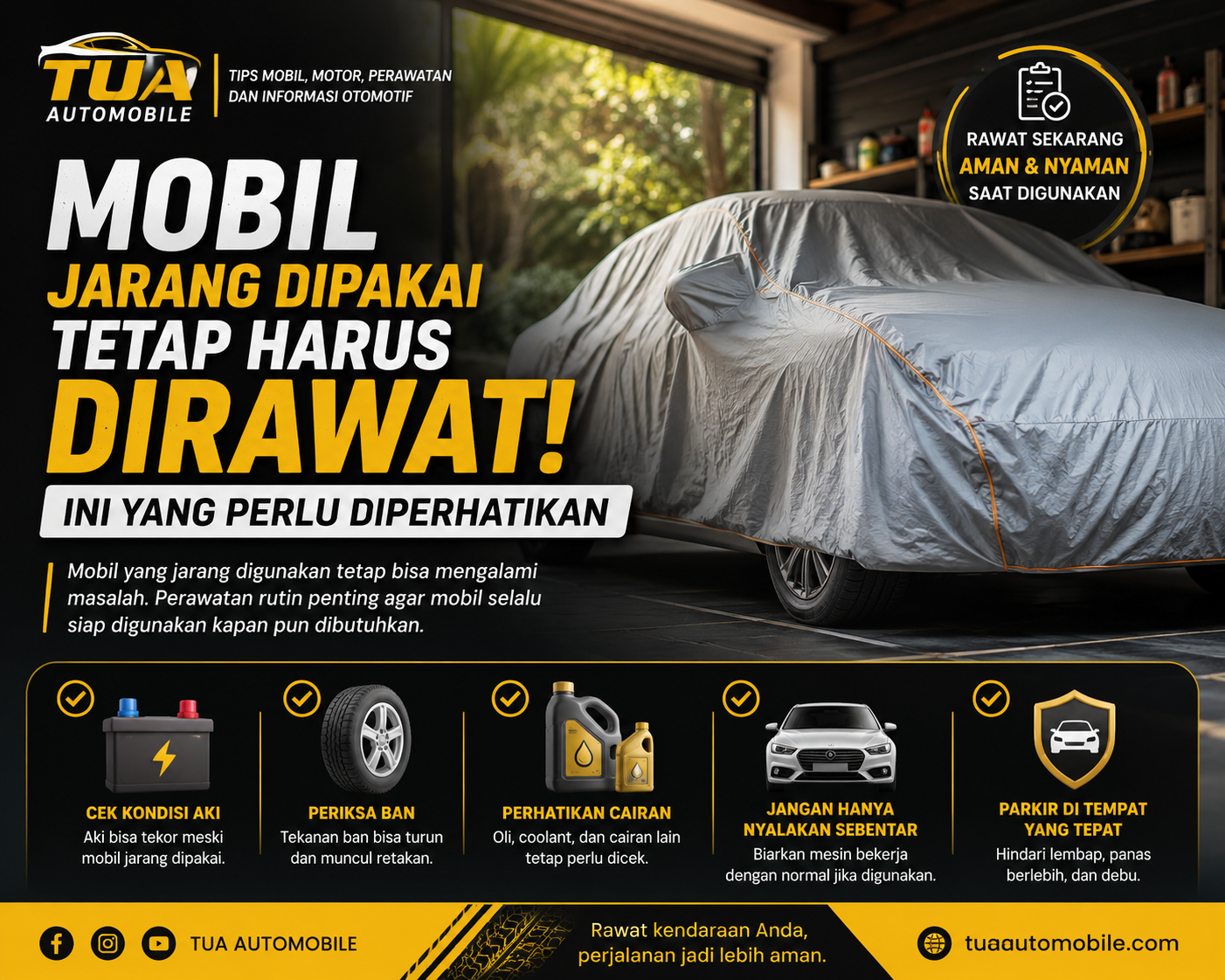
Mobil Jarang Dipakai Tetap Harus Dirawat? Ini yang Perlu Diperhatikan
Mobil yang lebih sering terparkir di rumah sering dianggap tidak…

Mobil Keyless Bisa Dicuri Tanpa Merusak Kaca? Waspadai Relay Attack
Mobil dengan sistem keyless menawarkan kemudahan karena pintu dapat dibuka…

Sentuhan Mewah SUV Offroad: Intip Varian Vertex dan Penyegaran Terbaru Land Rover Defender
Land Rover kembali memperluas daya tarik Defender melalui kehadiran varian…